
Introduce
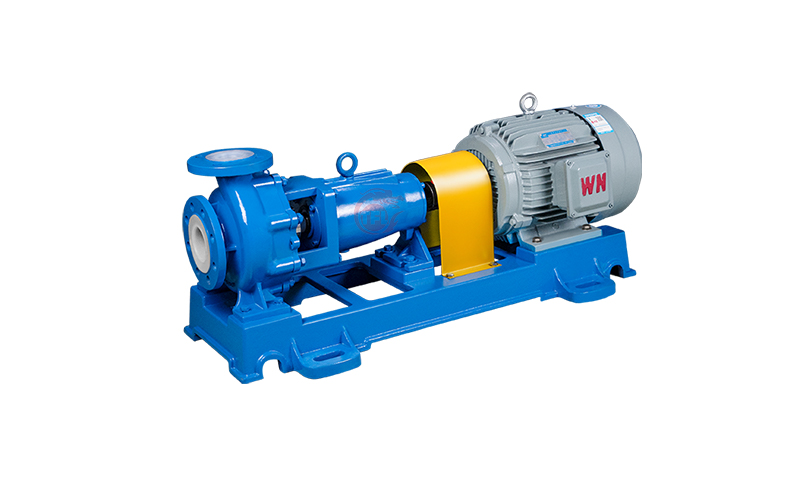
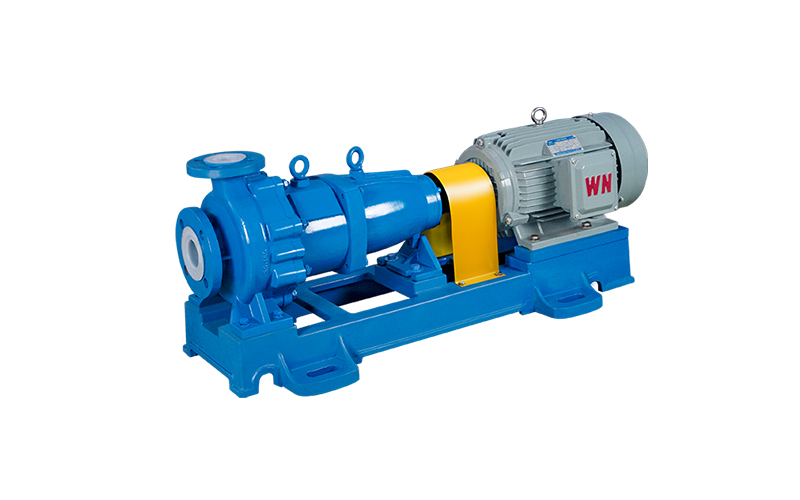
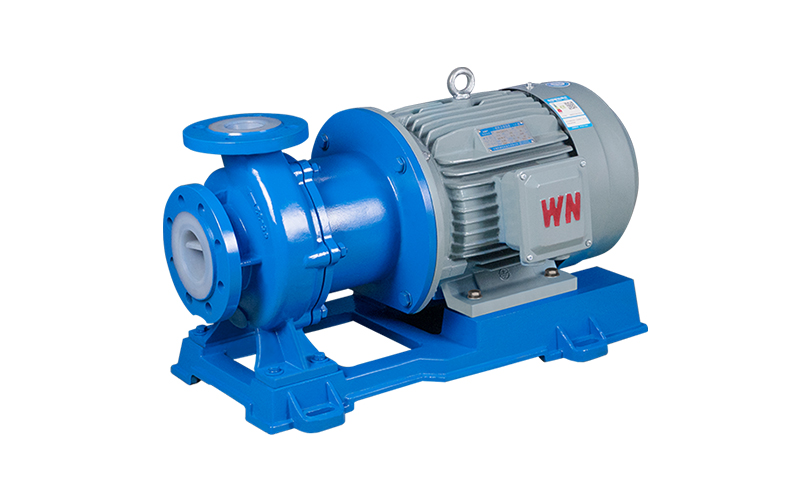
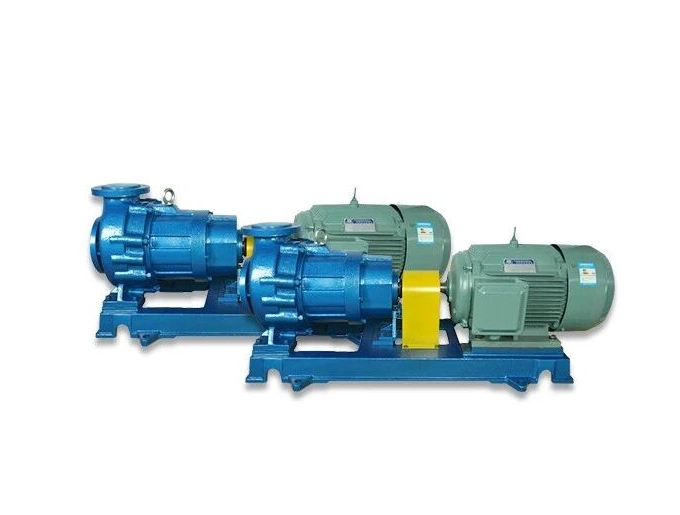
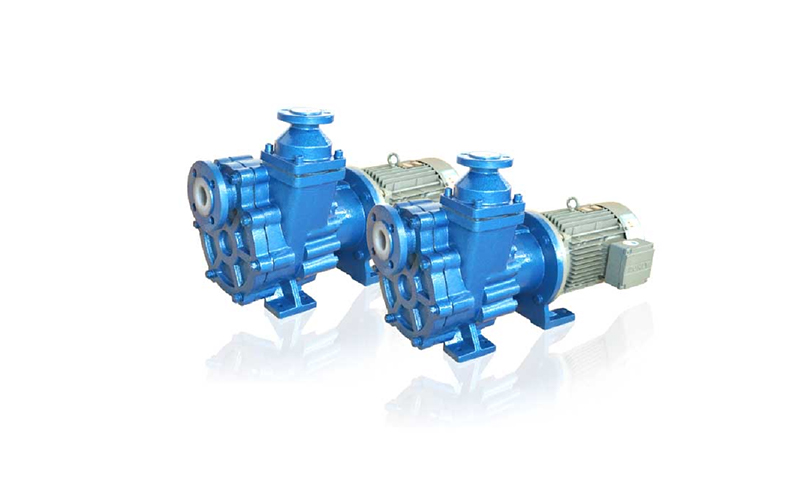
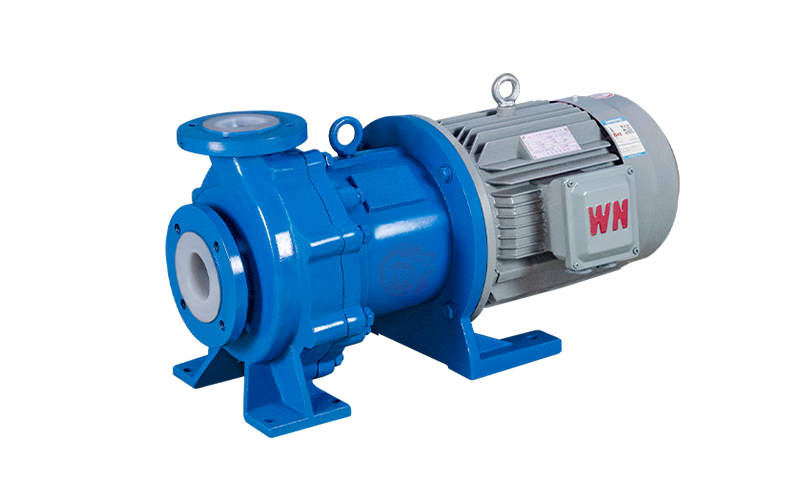
IMD-F heavy-duty fluoroplastic magnetic pump
The IMD-F heavy-duty magnetic pump is suitable for conveying highly corrosive substances such as chlor alkali, chlorobenzene, aluminum foil, acid washing, pesticides, etc.
Main parameters of IMD-F fluoroplastic magnetic pump:
Flow rate: 1m ³/h-200mm ³/h (1000L/h-200000 L/h).
Head: 5-50 meters (0.5 bar -5 bar).
Power: 1.1kW-55kW (2HP-75HP).
Applicable media: Any concentration of acid, alkali, salt, organic solvent, etc.
Working temperature: -20 ℃ -180 ℃.
Our company can choose different configurations based on actual work situations and provide accurate solutions.
1, Internal magnetic rotor: integrated sintering, rare earth internal magnetic, balanced and stable.
2, fluorine-lined pump shell: fluorine-lined smooth, no deformation, double life.
3, strengthening sleeve: polyether ether ketone, strong high pressure resistance, durable.
4, external magnetic: strong magnetic group, rare earth magnetic steel, firmly locked.

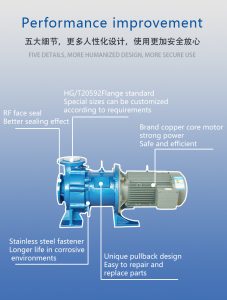
Five details
More user-friendly design with five major details, ensuring safer and more reliable use.
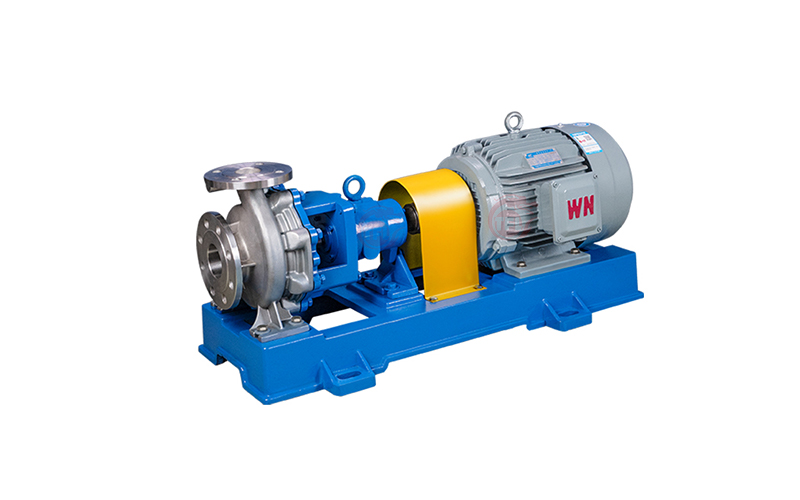
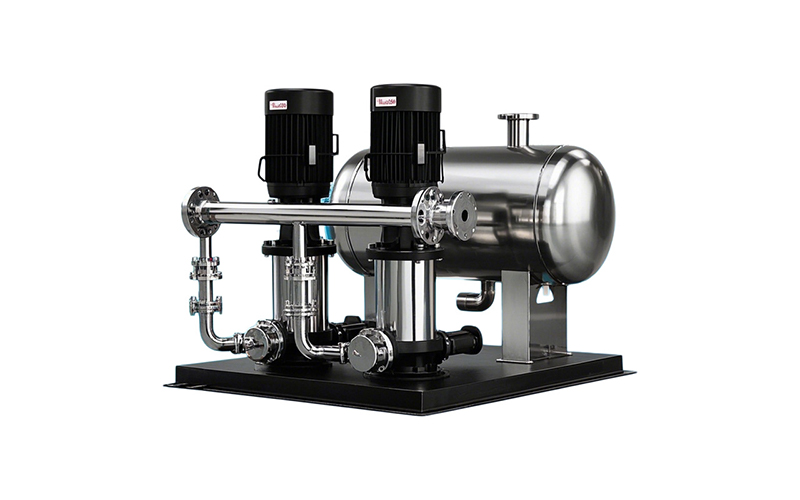
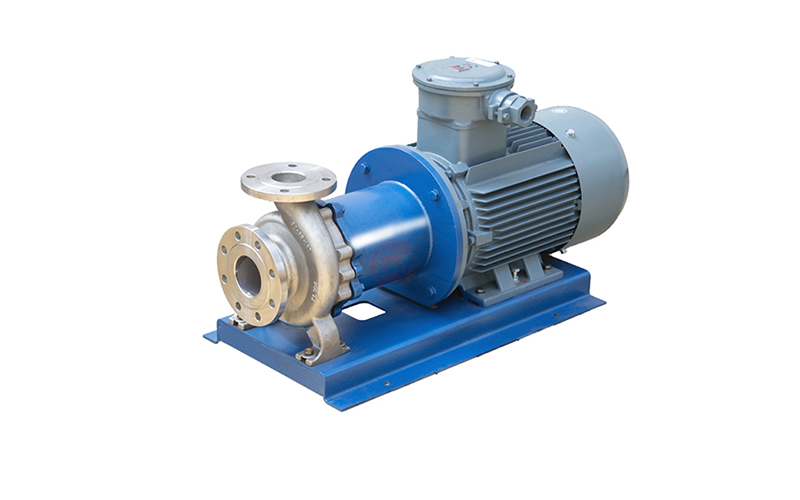
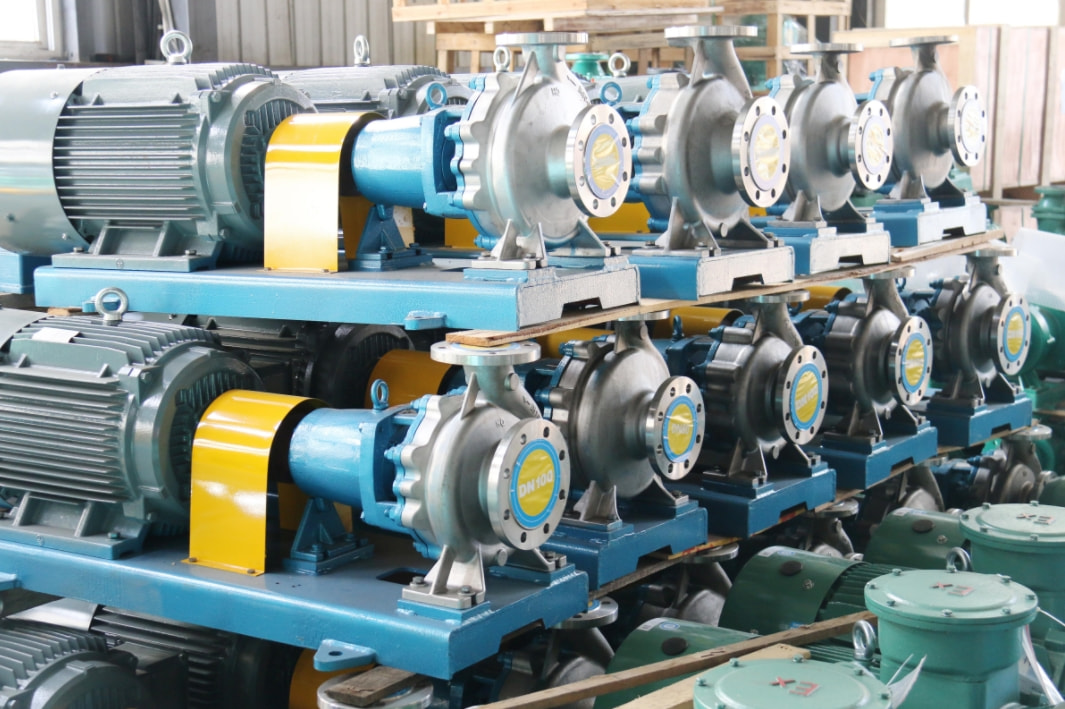
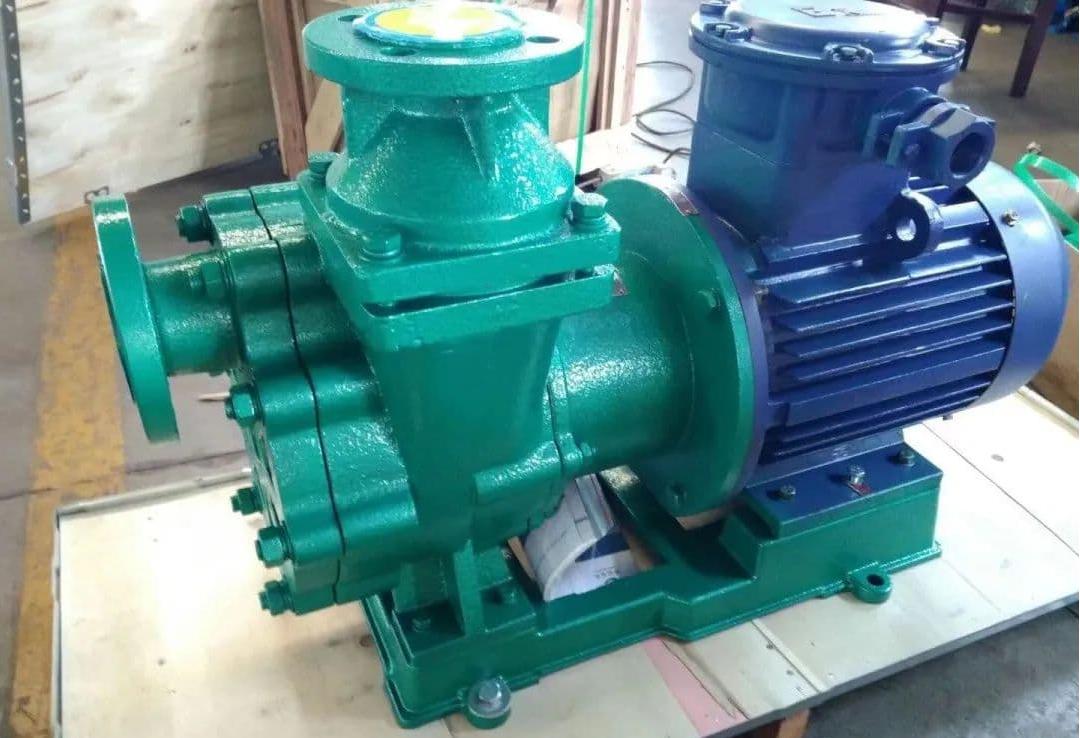
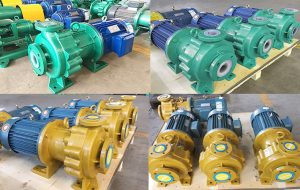
Product picture
Take real pictures of factory products.
Development history of magnetic pumps
The development of magnetic pumps:
Magnetic pump is an integrated motor and water pump, which not only facilitates installation but also greatly saves installation space. At the same time, it reduces a series of problems that may occur during the separate installation process of the motor and water pump
The magnetic coupling drive pump (referred to as the magnetic drive pump) was first developed by Geoffrey Howard from HMD in the UK in 1947. A few years later, Franz Klaus from West Germany also successfully developed it one after another. The first two companies to use magnetic drive pumps were Imperial Chemical Industries in the UK and Bayer Chemical in Germany. The initial purpose of developing magnetic pumps was to protect the safety and health of personnel engaged in industrial fields such as chemical, nuclear power, and national defense.
After the mid-1970s, the development of new generation permanent magnets and silicon carbide bearing technologies such as rare earth cobalt (1978) and the most powerful neodymium iron boron (1983) greatly improved the technical level of magnetic drive pumps. According to foreign samples and literature, the flow rate of magnetic drive pumps can now reach 1150m3/h; Lift up to 500m; Medium temperature range -120 ℃ to 450 ℃; The viscosity limit is 100-200cp; The content of abrasive solid particles in the medium can reach 1.5% (by weight), and the particle size of solid particles can reach 100 μ m; After taking special measures, the pump can transport slurry containing 20% insoluble solids, with a solid diameter of up to 20mm; The system pressure can reach 450 bar.
Common faults and solutions
| fault phenomenon | fault cause | deal with |
|
Pump not working |
1. Foreign body in pump 2. The impurities in the pump bearing are gathered and stuck 3. Friction between inner and outer magnetic rotor and sealing cover 4. Electrical faults |
1. Remove foreign bodies 2. Disassemble and clean 3. Disassembly inspection 4. Check the electrical components |
|
Insufficient flow or low output pressure |
1. Suction head is too low 2. Excessive gap between oral rings 3. There is gas in the pump 4. Demagnetization of magnetic body |
1. Clean the suction filter to increase the liquid level 2. Replace the mouth ring 3. Exhaust 4. Replace |
|
Vibration and noise |
1. The coupling is not centered 2. Bearing wear or damage 3. There are foreign bodies in the pump 4. The external magnetic rotor is not properly fixed on the drive shaft 5. Anchor bolts are loose 6. Cavitation |
1. Recalibrate 2. Replace the bearing 3. Remove foreign bodies 4. Reassemble the external magnetic rotor 5. Tighten anchor bolts 6. Process adjustment |
| leakage |
1. The sealing bolt is loose 2. The sealing cover is damaged 3. Gasket failure and damage |
1. Tighten loose bolts 2. Replace the sealing cover 3. Check the replacement |
|
overcurrent |
1. The pump enters the debris 2. The material viscosity is high 3. Bearing damage |
1. Remove debris 2. Measurement viscosity should meet the requirements 3. Replace the bearing |
|
undercurrent |
1. The pump enters the debris 2. The material viscosity is high 3. Bearing damage |
1. Remove debris 2. Measurement viscosity should meet the requirements 3. Replace the bearing |
|
The working temperature of the sealing cover is too high |
1. The magnetic body loses magnetism 2. Friction and cavitation between inner and outer magnetic rotor and sealing cover 3. The internal reflux channel is not smooth |
1. Check the replacement 2. Correct alignment 3. Adjust the disassembly and dredging to eliminate the operating conditions |
Wide use
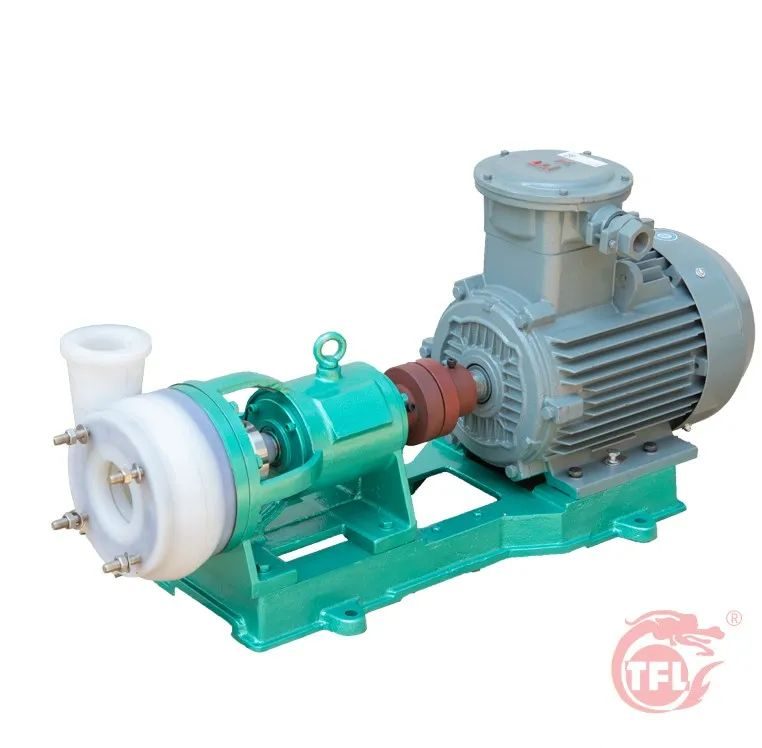
Fluoroplastic pumps play an important role in chemical production due to their excellent corrosion resistance and reliability.
1、 The main characteristics of fluoroplastic pumps
The reason why fluoroplastic pumps are widely used in chemical production is mainly due to their following characteristics:
Excellent corrosion resistance: Fluoroplastic materials have extremely strong chemical stability and can resist corrosion from various acids, alkalis, salts, and organic solvents.
Superior high-temperature performance: Fluoroplastics can maintain stable physical and chemical properties in high-temperature environments, suitable for conveying high-temperature media.
Good wear resistance: Fluoroplastics have good wear resistance and can maintain stable performance in long-term use.
Leak free design: Many fluoroplastic pumps adopt a design without mechanical seals, avoiding leakage issues and ensuring safety.
2、 The application of fluoroplastic pumps in chemical production
1. Acid and alkali liquid transportation
In chemical production, the transportation of acidic and alkaline liquids is a common process link. Due to the strong corrosiveness of acidic and alkaline liquids, ordinary pumps are difficult to handle. The excellent corrosion resistance of fluoroplastic pumps makes them an ideal choice for transporting highly corrosive media such as sulfuric acid, nitric acid, hydrochloric acid, and sodium hydroxide.
2. Organic solvent transportation
In chemical production, it is often necessary to transport various organic solvents, such as methanol, ethanol, acetone, benzene, etc. These solvents have high corrosion requirements for the material of the pump, and fluoroplastic pumps can effectively resist the corrosion of organic solvents, ensuring the safety and stability of the transportation process.
3. High temperature medium transportation
Many chemical production processes require high-temperature conditions, and fluoroplastic pumps can maintain good performance in high-temperature environments, suitable for conveying high-temperature media such as concentrated sulfuric acid and hydrochloric acid.
4. Wastewater treatment
In the process of chemical wastewater treatment, the wastewater often contains corrosive media such as strong acids, strong alkalis, and organic solvents. The corrosion resistance of fluoroplastic pumps enables their widespread application in wastewater treatment processes, effectively ensuring the safe and stable operation of wastewater treatment systems.
5. Absorption of corrosive gases
In chemical production, the absorption and treatment of corrosive gases is an important step. Fluoroplastic pumps can be used to transport absorption liquids, ensuring the safety and efficiency of the absorption process.
3、 Precautions for selecting fluoroplastic pumps
When choosing a fluoroplastic pump, the following factors should be considered:
Medium characteristics: Select appropriate pump types and materials based on the corrosiveness, temperature, viscosity, and other characteristics of the transported medium.
Flow rate and head: Determine the flow rate and head of the pump according to process requirements to ensure that the pump’s performance meets production needs.
Operating environment: Consider factors such as the installation location and operating environment of the pump, and choose the appropriate pump structure and accessories.
Maintenance and upkeep: Choose pump types that are easy to maintain and upkeep, reducing downtime and maintenance costs.
Plastic pumps have been widely used in chemical production due to their excellent corrosion resistance, high temperature performance, and reliability. Whether it is the transportation of acidic and alkaline liquids, organic solvents, high-temperature media, wastewater treatment, or corrosive gas absorption, fluoroplastic pumps can provide reliable solutions. When choosing a fluoroplastic pump, users should choose the appropriate pump type and material based on specific working conditions and medium characteristics to ensure the safety and efficiency of the production process.