
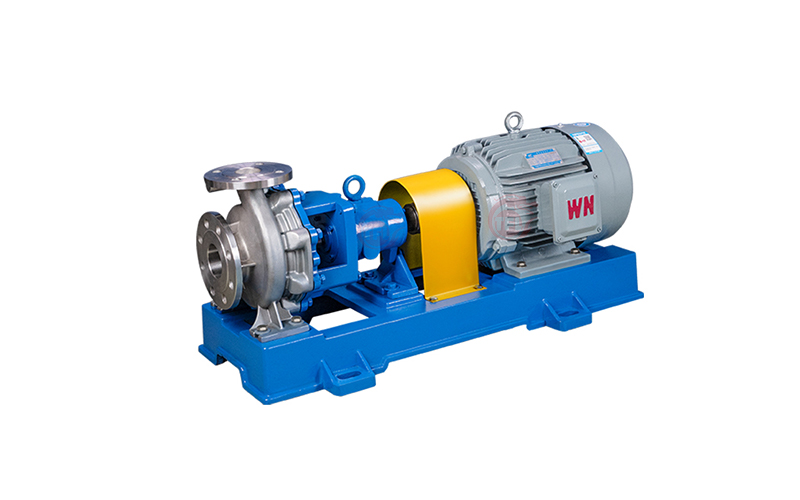
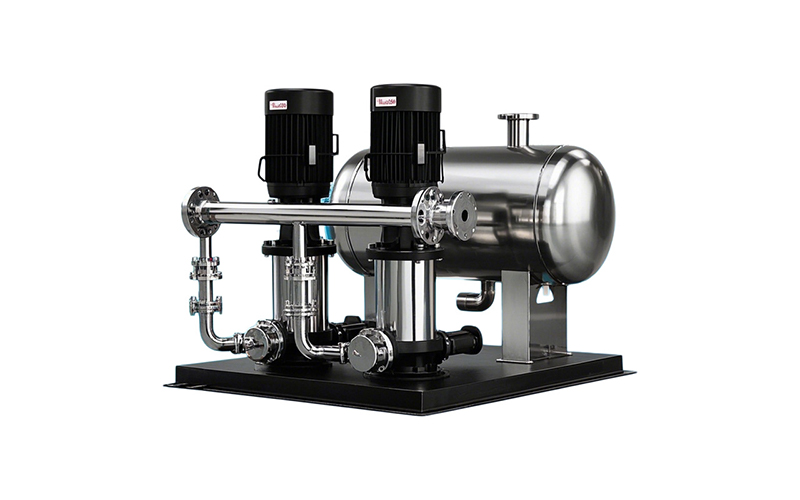
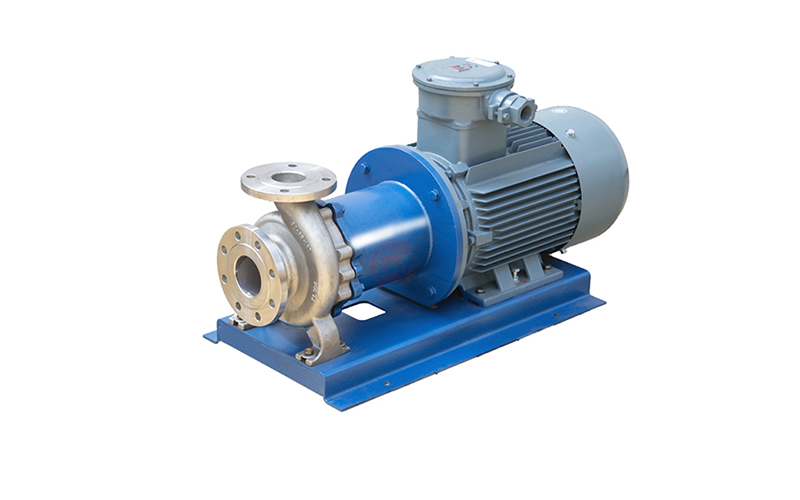
1. Self-priming height
It refers to the vertical distance from the center of the water pump impeller to the liquid surface. The determining factor is the size of the liquid storage cavity during the design process of the pump. The larger the liquid storage cavity, the more cooling water can be provided to the mechanical seal, and the more the pump can tolerate the dry operation during self-priming. Similarly, the longer the dry operation time, the more air is discharged, and the higher the self-priming height. Generally, the dry operation time of the mechanical seal cannot exceed 30s, but the self-priming pump can maintain it within 3min. The self-priming height is generally within 3m.
2. Suction height
The suction height is also called the suction stroke of the water pump or the required cavitation margin △h. The calculation formula is: △h=10.33m atmospheric pressure water column-the cavitation margin of the pump-pipeline loss, etc. In the formula, 10.33m is the standard atmospheric pressure (sea level). If it is in a high altitude area, the pressure will decrease and the suction height will also decrease. The cavitation margin is a data that has been formed during the design process of the pump, which is generally a given value. Pipeline loss, etc., is generally taken as 0.5m, and this value also includes a safety margin.
Installation precautions:
1. The outlet pipeline must be kept unobstructed, and special attention should be paid to not installing a check valve. If it must be installed, please install a bypass valve between the check valve and the pump outlet for exhaust. When the exhaust valve is out of water, close it to work normally.
2. The parallel pipeline distance of the pump shall not exceed 0.5 meters, otherwise it will also affect the self-priming height, because the air in the parallel pipeline also needs to be discharged by the self-priming pump when running empty.
3. The pump inlet connection pipeline must be completely sealed and no air leakage is allowed, especially for welding pipelines, where the welding scar position is particularly easy to ignore.