
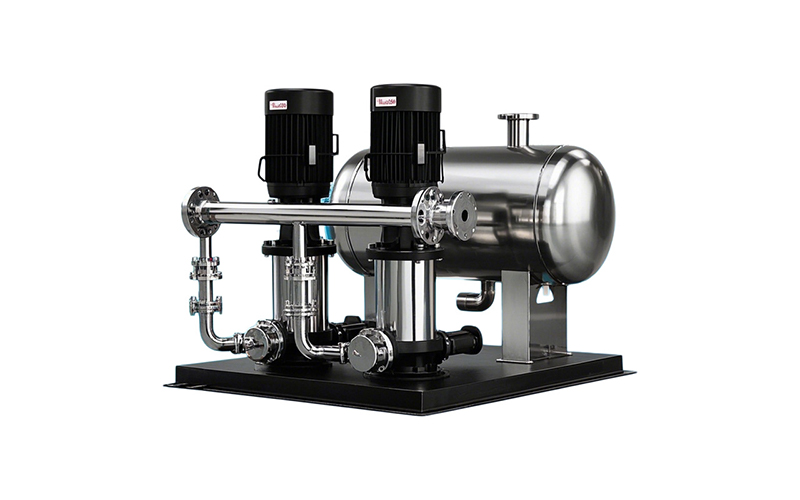
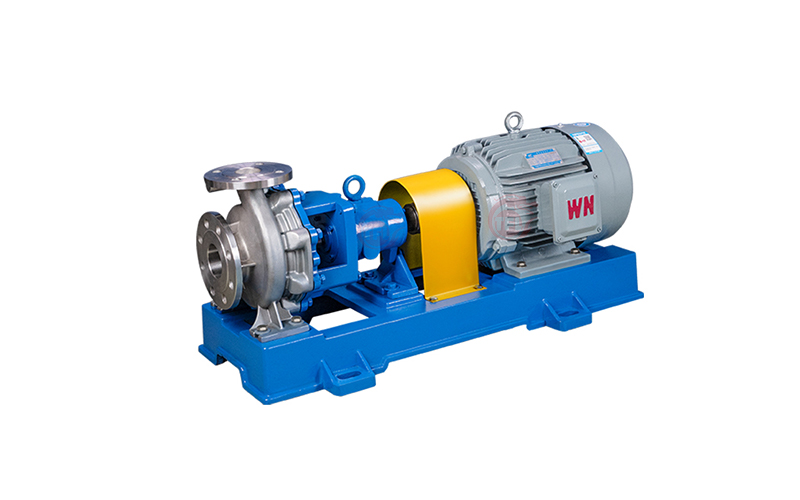
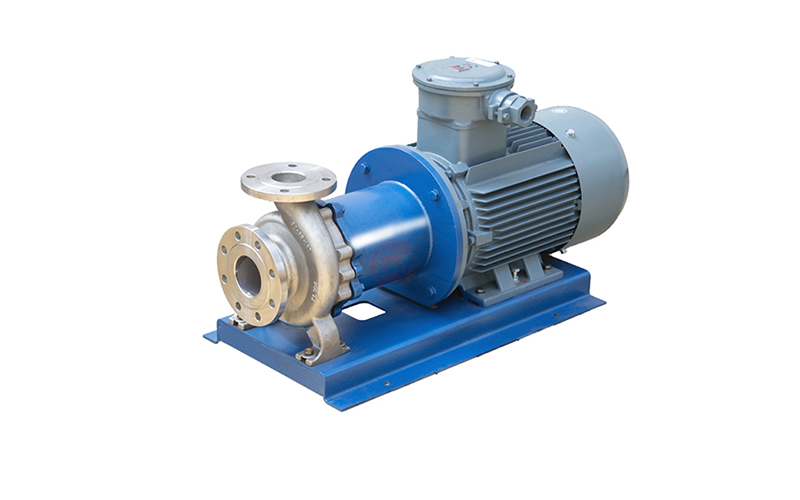
Common corrosive liquids in the chemical industry include sulfuric acid, nitric acid, hydrochloric acid, hydrobromic acid, hydroiodic acid, etc. Pumps of different materials are required to transport different liquid media. If the corresponding chemical pump is not selected correctly, it will easily cause corrosion. Once corroded, the chemical pump cannot be used. Teflon pumps and valves have summarized some common corrosive liquids corresponding to the water pump selection, which I believe will be helpful for everyone to correctly select acid and alkali resistant chemical pumps.
1. Analysis of hydrochloric acid medium
The order of common metal activity of hydrochloric acid corrosiveness: potassium, sodium, calcium, magnesium, aluminum, zinc, iron, tin, lead, (hydrogen), copper, mercury, silver, platinum, gold. The more forward, the more active. The one in front of hydrogen can react with hydrogen. Therefore, when choosing a hydrochloric acid pump, you cannot use a metal (iron-based) pump. Austenitic stainless steels such as 304 and 316L will also produce intergranular corrosion in a medium containing chloride ions. Special metal materials are also used, such as Hastelloy, but the price is very expensive. Therefore, when choosing a hydrochloric acid pump, you should choose a pump made of fluoroplastic material for the flow-through parts, which is both economical and safe.
(1) If there are hard particles in the hydrochloric acid (waste hydrochloric acid in the pickling process), it needs to be filtered. When choosing a centrifugal pump, consider that the mechanical seal should be used (SIC against SIC). When the waste hydrochloric acid is not filtered thoroughly, it can ensure that the mechanical seal can operate normally.
(2)For pure hydrochloric acid without particles, a centrifugal pump or a magnetic pump can be selected.
Most non-metallic materials have good corrosion resistance to hydrochloric acid, so lined rubber pumps and plastic pumps (such as engineering plastics, fluoroplastics, etc.) are the best choices for transporting hydrochloric acid. The company’s applicable products include: IHF fluoroplastic centrifugal pumps, CQB fluoroplastic leak-free magnetic pumps, etc.
2. Analysis of nitric acid medium
Generally, most metals are quickly corroded and destroyed in nitric acid. Stainless steel is the most widely used nitric acid-resistant material, and has good corrosion resistance to nitric acid of all concentrations at room temperature. It is worth mentioning that the corrosion resistance of stainless steel containing molybdenum (such as 316, 316L) to nitric acid is not only not better than that of ordinary stainless steel (such as 304, 321), but sometimes even worse. For high-temperature nitric acid, titanium and titanium alloy materials are usually used. Concentrated nitric acid contains about 65% HNO3, with a density of 1.4g/cm3. It has a strong pungent odor and corrosiveness. It is a strong oxidant and can react with almost all metals, but not with fluoroplastics. Therefore, the use of fluoroplastic pumps in nitric acid delivery pumps is both economical and durable.
We recommend the following nitric acid delivery pumps:
(1)If it is 98% concentrated nitric acid, you can choose the IHF type fluoroplastic centrifugal pump. The flow parts of this series of pumps are all made of fluoroplastics (polyperfluoroethylene propylene), and the mechanical seal adopts an external bellows mechanical seal filled with tetrafluoro material, which effectively prevents the leakage of concentrated sulfuric acid. The selected motor power needs to be increased. The specific shaft power when conveying concentrated nitric acid can be calculated based on the rated shaft power of the pump.
(2)If it is a low-concentration dilute nitric acid, you can choose the leak-free CQB (magnetic drive centrifugal pump) fluoroplastic magnetic drive pump. This series of pumps uses magnetic drive and has no leakage. It is specially used to convey highly corrosive media such as nitric acid, sulfuric acid, and hydrochloric acid.
3. Sulfuric acid, as one of the strong corrosive media, is an important industrial raw material with a wide range of uses. The types of pumps for conveying sulfuric acid include fluoroplastic centrifugal pumps, fluoroplastic magnetic pumps, fluoroplastic self-priming pumps, etc. Sulfuric acid of different concentrations and temperatures has a large difference in corrosion to materials. For concentrated sulfuric acid with a concentration of more than 80% and a temperature of less than 80°C, carbon steel and cast iron have good corrosion resistance, but they are not suitable for high-speed flowing sulfuric acid and are not suitable for use as pump and valve materials; ordinary stainless steel such as 304 (0CR18NI9) and 316 (0CR18NI12MO2TI) are also limited in their use for sulfuric acid media. Therefore, pumps and valves for conveying sulfuric acid are usually made of high-silicon cast iron (difficult to cast and process) and high-alloy stainless steel (No. 20 alloy), but they are difficult to process and expensive, so they are not favored by people. Fluoroplastic alloys have excellent resistance to sulfuric acid. At present, no chemical medium has been found to react with them within the applicable temperature range, so the use of fluorine-lined pumps (F46) is a more economical choice. Applicable products include: CQB fluoroplastic magnetic pump, IMD fluoroplastic magnetic pump, IHF fluoroplastic centrifugal pump, FSB fluoroalloy centrifugal pump, etc.
4. Acetic acid is one of the most corrosive substances among organic acids. Ordinary steel will be severely corroded in acetic acid of all concentrations and temperatures. Stainless steel is an excellent acetic acid resistant material. Molybdenum-containing 316 stainless steel can also be used for high temperature and dilute acetic acid vapor. For high temperature and high concentration acetic acid or other corrosive media and other demanding requirements, high alloy stainless steel or fluoroplastic pumps can be selected.
The characteristics of nitric acid and acetic acid are somewhat similar, but they cannot be generalized when choosing fluoroplastic pumps. For example, when choosing fluoroplastic centrifugal pumps, fluoroplastic magnetic pumps or fluoroplastic self-priming pumps, it is still necessary to select the most suitable model according to the actual production environment of the enterprise. For example, some environments require high head. The longest head we encounter is 300 meters. Some require the pump type to provide insulation function, etc. Therefore, the selection of fluoroplastic pumps must be based on actual conditions and be careful and cautious.
5. Alkali (sodium hydroxide) Steel is widely used in sodium hydroxide solutions below 80°C and within 30% concentration. Many factories still use ordinary steel at 100°C and below 75%. Although corrosion increases, it is economical. Ordinary stainless steel has no obvious advantage over cast iron in corrosion resistance to alkali solution. As long as a small amount of iron is allowed to be added to the medium, stainless steel is not recommended. For high-temperature alkali solution, titanium and titanium alloys or high-alloy stainless steel are mostly used.
6. Salt water (seawater) Ordinary steel has a low corrosion rate in sodium chloride solution, seawater, and salt water, and generally requires coating protection; various types of stainless steel also have a very low uniform corrosion rate, but may cause local corrosion due to chloride ions, and 316 stainless steel is usually used.
7. The materials of hydrofluoric acid delivery pumps are generally selected as follows: Magnesium (Mg): It is an ideal corrosion-resistant material for hydrofluoric acid and is generally only used as a container; Titanium: It is suitable for concentrations of 60~100% (room temperature), and the corrosion rate increases when the concentration is lower than 60%; Monel alloy: It is an outstanding material resistant to hydrofluoric acid and can withstand all temperatures and all concentrations (including boiling point); Silver (Ag): Boiling hydrofluoric acid, mostly used in metering devices.
8. Alcohols, ketones, esters, and ethers Common alcohol media include methanol, ethanol, ethylene glycol, propanol, etc., ketone media include acetone, butanone, etc., ester media include various methyl esters, ethyl esters, etc., and ether media include methyl ether, ethyl ether, butyl ether, etc. They are basically non-corrosive and can be used with commonly used materials. When selecting, reasonable choices should be made based on the properties of the media and related requirements. It is also worth noting that ketones, esters, and ethers are soluble in many types of rubbers, so avoid mistakes when selecting sealing materials. There are many other media that cannot be introduced here one by one.