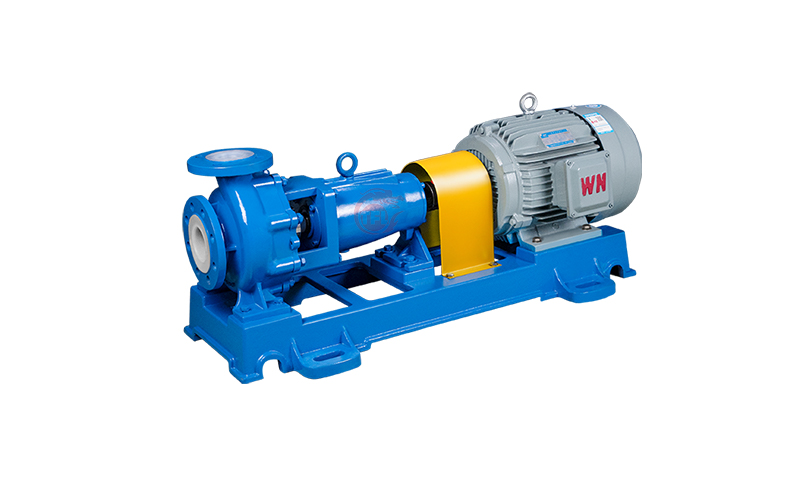
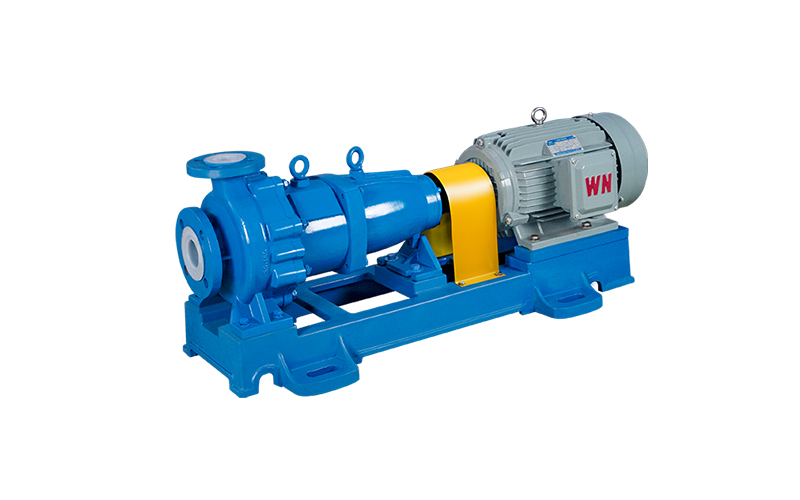
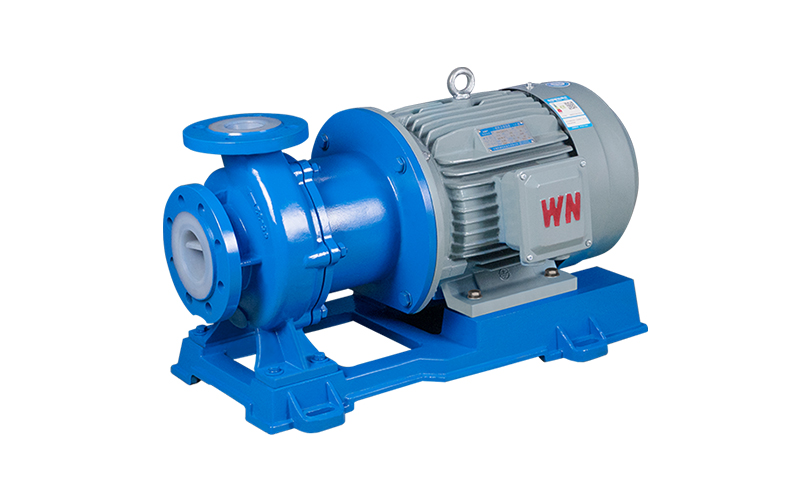
Introduction
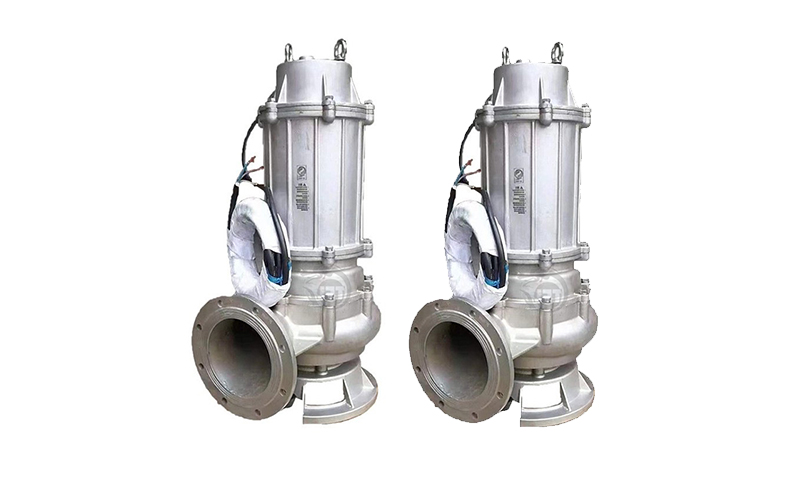
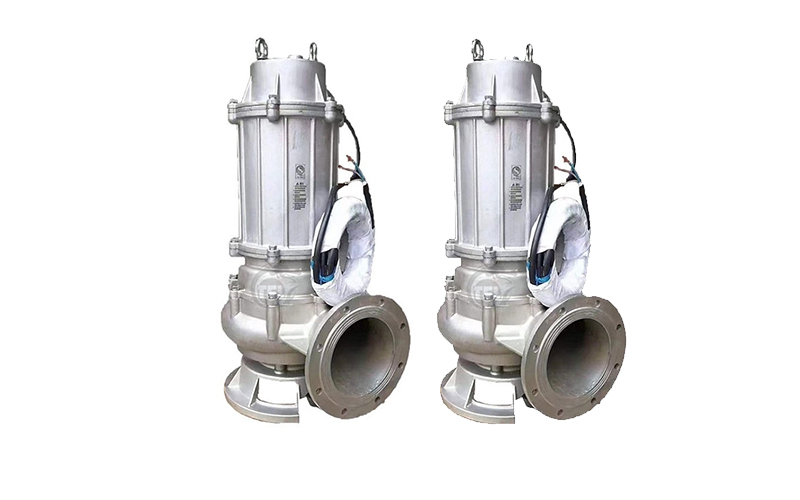
Submersible sewage pump is a submersible sewage pump, which can tear and cut off long fibers, bags, belts, grass, cloth and other substances in sewage, and then discharge smoothly, especially suitable for conveying liquids containing hard solids, fibers and especially dirty, sticky, slippery liquids.
Suitable for industrial and urban water supply and drainage. Environmental protection, construction, chemical, pharmaceutical, dyes, brewing, electricity, electroplating, papermaking, etc. WQ type non-clogging submersible sewage pump is a new generation of pump products successfully developed by combining the characteristics of domestic and foreign pumps. It has the characteristics of excellent energy saving effect, anti-winding, non-clogging, automatic installation and automatic control. Compared with the traditional impeller, the impeller adopts the form of single or double channel, which is similar to a curved pipe with the same section size, has very good flow performance, and is equipped with a reasonable cochlear chamber, which makes the pump with high efficiency, and the impeller is tested by dynamic and dynamic balance, so that the pump has no vibration in operation.
Advantage
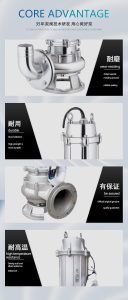
1. Compact structure and small footprint. The submersible sewage pump can be installed directly in the sewage tank because it works under the liquid, and there is no need to build a special pump room for installing pumps and machines, which can save a lot of land and infrastructure costs.
2. Easy installation and maintenance. Small sewage pumps can be installed freely, large sewage pumps are generally equipped with automatic coupling devices can be automatically installed, installation and maintenance is quite convenient.
3. Long continuous operation time. Because the pump and motor are coaxial, the shaft is short, and the rotating parts are light in weight, the load on the bearing (radial) is relatively small, and the life is much longer than that of the general pump.
4. There is no cavitation damage and irrigation water problems. In particular, the latter point brings great convenience to the operator.
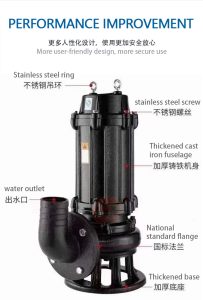
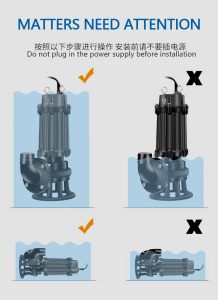
Matters need attenion
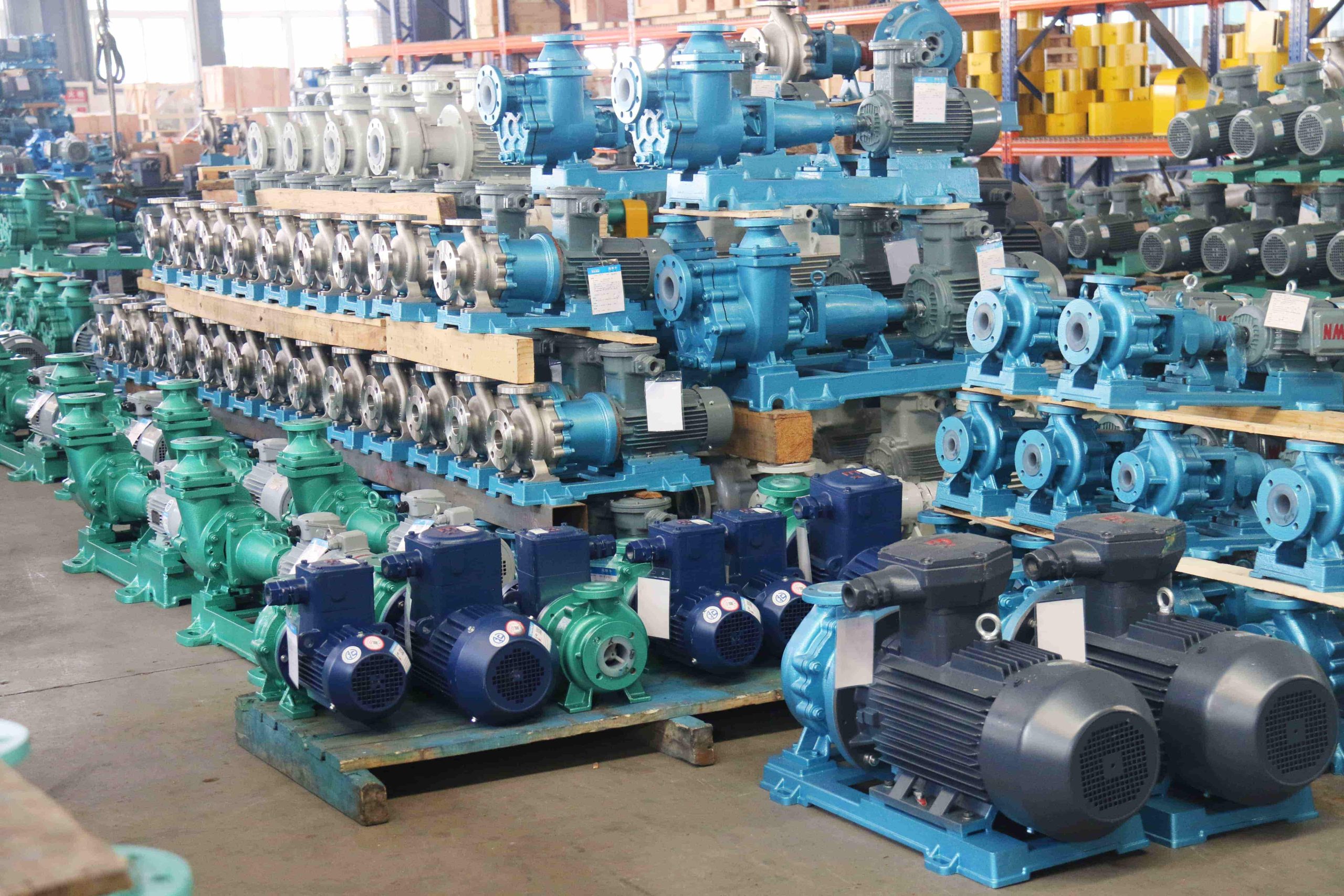
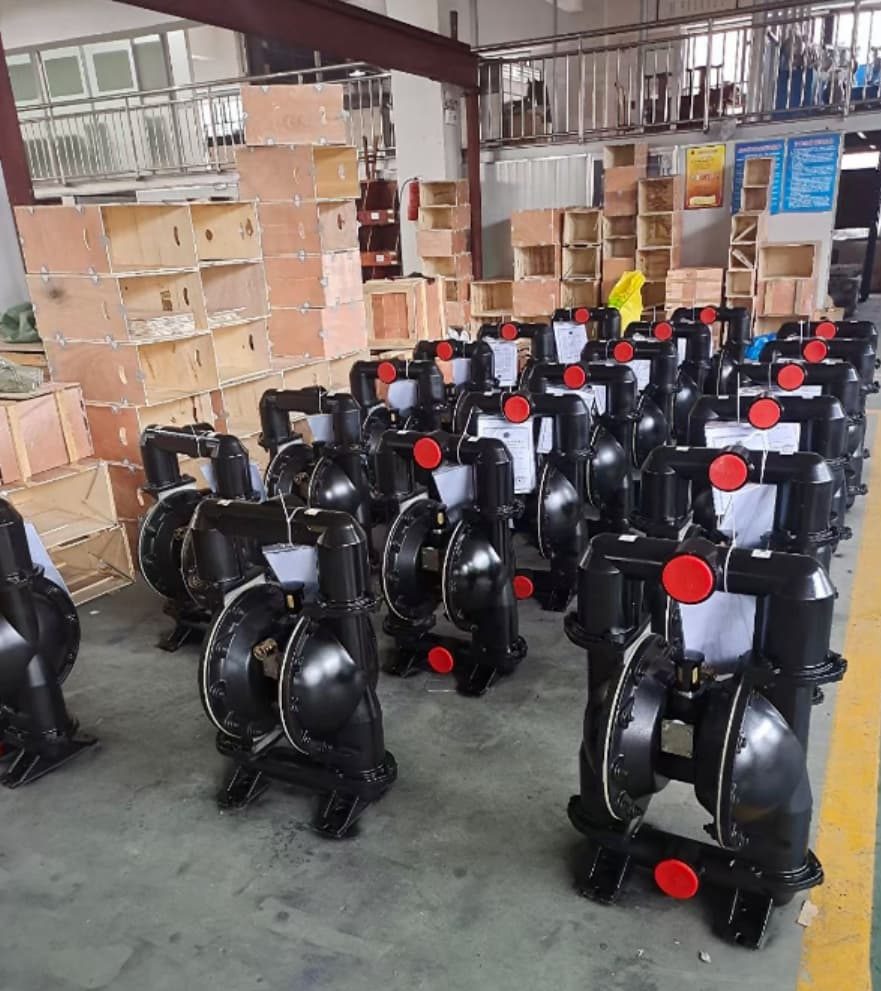
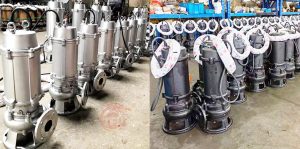
Factory physical display
Troubleshooting and troubleshooting methods
Analysis and troubleshooting methods for submersible pumps:
Due to environmental and time factors during the operation of the submersible pump, certain faults may inevitably occur. In order to improve its work efficiency, we promptly identify the cause and troubleshoot the submersible pump.
1、 The submersible pump has abnormal vibration and instability during operation:
The main reasons and troubleshooting methods for abnormal vibration and instability in the operation of submersible pumps:
1. The anchor bolts of the water pump base are not tightened or loose. (Tighten all anchor bolts evenly)
2. The water outlet pipeline is not supported independently, and the vibration of the pipeline affects the water pump. (Provide independent and stable support for the outlet pipe of the water pump to prevent the flange of the outlet pipe from bearing weight)
3. Impeller quality imbalance, even damage or loose installation. (Repair or replace impeller)
4. The upper and lower bearings of the water pump are damaged. (Replace the upper and lower bearings of the water pump)
2、 What are the reasons why centrifugal pumps cannot meet the flow and head requirements?
1. Leakage of centrifugal pump or suction pipe;
2. The inlet of the suction pipeline or centrifugal pump is blocked, resulting in excessive suction resistance;
3. The wear clearance of the impeller mouth ring is too large;
4. Impeller blockage or severe wear and corrosion;
5. The rotation direction of the centrifugal pump is incorrect or the impeller is installed in the opposite direction;
6. The outlet valve of the centrifugal pump is not open or not open enough;
7. Insufficient motor speed;
8. The selection or performance of the centrifugal pump does not match.
3、 Solution:
1. Check and clean the suction valve and pipeline;
2. Remove impeller blockages or replace the impeller;
3. Replace the impeller sealing ring;
4. Check and eliminate air leaks;
5. Open the outlet valve of the pump and adjust the valve opening;
6. Adjust the rotation direction of the pump;
7. Increase the motor speed;
8. Verify the performance parameters of the pump to ensure they meet the operating requirements and make adjustments accordingly.
Installation knowledge of submersible pumps
一、 Pre start inspection:
1. The water pipe should be firmly tied;
2. The plugs for air release, water discharge, oil injection, etc. should be tightened;
3. The insulation of the impeller should be good.
2、 The working voltage is within the range of 342 to 418V.
3、 The electric pump should be placed in a sturdy net basket and placed in the water to prevent weeds and debris from crushing the impeller. The shallowest depth of its sinking into the water is 0.5m, and the deepest depth does not exceed 3m; It should be upright in water and not immersed in mud to prevent burning due to poor heat dissipation.
4、 When putting an electric pump into or out of the water, it is necessary to pull the rope that is fastened to the pump ear ring, and it is strictly prohibited to pull the cable. It is advisable to fit the electric pump pipe joint on the outlet pipe.
5、 After connecting the power supply, first test run and check if the rotation direction is correct. The electric pump should not run outside the water for more than 5 seconds to prevent overheating.
6、 Electric pumps should be equipped with zero or leakage protection devices.
7、 Do not restart immediately after stopping. Start no more than ten times per hour. After shutdown, wait for at least 1 second before starting up. If abnormal sound is found during operation, the power should be immediately cut off for inspection.
8、 After using a new electric pump or an electric pump with a new rubber sealing ring for 50 hours, the water seal plug should be opened to check for leakage (water and oil flowing out). If it does not exceed 5ml, it indicates that the sealing is normal. If it exceeds 5ml, a pressure test of 196kpa (2kgf/cm2) should be conducted. After checking the cause of the leak, eliminate it. Check once a month in the future. If the leakage does not exceed 25ml, it can continue to be used. After inspection, the oil seal plug must be opened and the oil stored in the oil chamber must be poured out, and the specified lubricating oil must be replaced.
9、 The repaired oil immersed submersible pump should first undergo a 196kpa (2kgf/cm2) air pressure test to check for any leaks in all parts, and then add lubricating oil to the upper and lower casings.
10、 When the temperature of the location where the electric pump is used is below 0 ℃, when it stops running, the electric pump should be removed from the water and wiped dry before being stored indoors.
11、 The insulation resistance of the motor stator winding to ground should be measured once a week to check for any decrease.