
1. Principle of magnetic pump
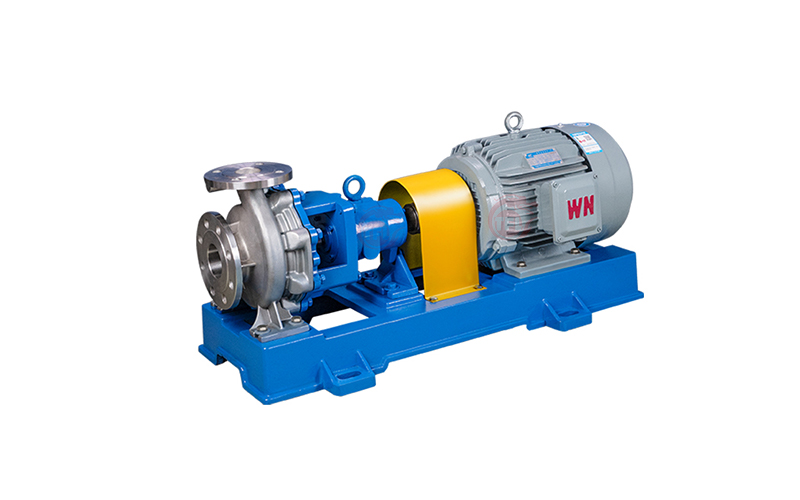
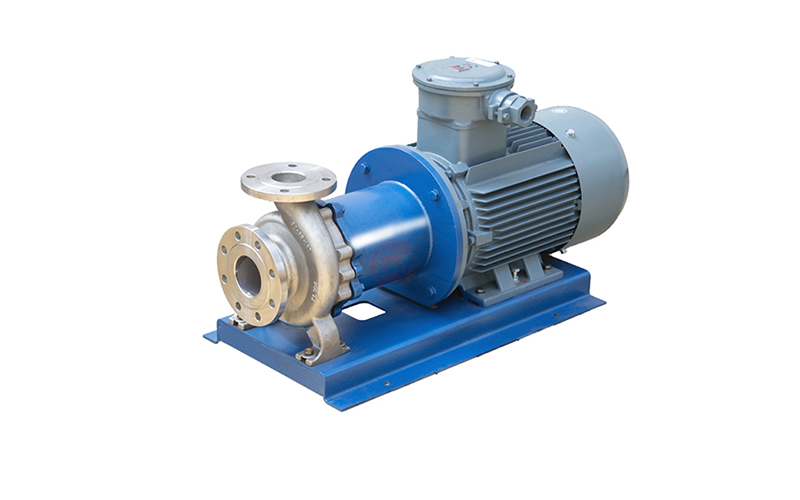
The magnetic pump consists of three parts: motor, magnetic coupling mechanism and pump. The torque output by the motor is transmitted to the impeller through the magnetic coupling mechanism (internal and external magnetic cylinders), thereby achieving the purpose of conveying the medium.

2. Classification of magnetic pumps
There are many types of magnetic pumps, which can be divided into many types according to the type, working condition and driving principle.
(1) According to the different types of pumps themselves, they can be divided into magnetic drive centrifugal pumps, magnetic drive gear pumps, magnetic drive screw pumps, etc., among which magnetic drive centrifugal pumps are the main type of magnetic pumps currently used;
(2) According to the different applicable working conditions, they can be divided into ordinary magnetic pumps, high temperature magnetic pumps and corrosion resistant magnetic pumps;
(3) According to the different magnetic drive principles, they can be divided into synchronous magnetic drive magnetic pumps and asynchronous magnetic drive magnetic pumps.
Currently, most magnetic pumps use synchronous magnetic drive. The asynchronous magnetic drive magnetic pump uses a cage-type torque ring to replace the inner magnetic cylinder, and generates a slightly lower speed through the electromagnetic field. The temperature at which this type of magnetic pump can be used is higher than that of the synchronous magnetic drive magnetic pump.
3. Structural features of magnetic pump (centrifugal type)
The magnetic pump is mainly composed of pump body, impeller, inner and outer shafts, magnetic coupling mechanism, sliding bearing, coupling and motor.
(1) Magnetic coupling mechanism. The magnetic coupling mechanism of the magnetic pump is composed of inner and outer magnetic cylinders and isolation sleeves. The inner and outer magnetic cylinders of the magnetic pump are permanent magnets made of even pairs of rare earth permanent magnetic materials, which are arranged and distributed in a regular pattern. The operating temperature can reach -45~100℃, and the magnetic field direction of the permanent magnet has good anisotropy and is not prone to demagnetization.
The isolation sleeve of the magnetic pump is mostly made of non-magnetic metal or ceramic materials to completely seal the pumping medium and the inner magnetic cylinder.
(2) Sliding bearings. Since the sliding bearings of magnetic pumps are self-lubricated by the conveyed medium, different materials should be selected to make bearings according to different conveying media, among which silicon carbide ceramic bearings and graphite bearings are mainly used.
Silicon carbide ceramic bearings have strong load-bearing capacity and are extremely resistant to erosion, chemical corrosion, wear and heat. The operating temperature can reach about 500°C, and the service life is relatively long, generally reaching more than 3 a.
Compared with silicon carbide ceramic bearings, graphite bearings have good self-lubrication and can withstand short-term dry running. Graphite bearings can withstand temperatures up to about 450°C, but due to their poor wear resistance, their service life will be shorter than that of silicon carbide bearings.
(3) Cooling and lubrication system. When the magnetic pump is running, the annular gap area between the inner magnetic cylinder and the isolation sleeve will generate high temperature due to the magnetic eddy current. A small amount of medium must be used to flush and cool the annular gap area between the inner magnetic cylinder and the isolation sleeve and the friction pair of the sliding bearing. The flushing medium will take away the high temperature, thereby ensuring the safe operation of the magnetic pump.
If the cooling and lubrication inside the magnetic pump is not sufficient, the medium temperature in the annular gap area will be higher than the working temperature of the permanent magnet, causing the inner magnetic cylinder to gradually lose its magnetism and the magnetic transmission to fail. Therefore, the magnetic pump requires that the amount of cooling and lubrication medium must be guaranteed.