
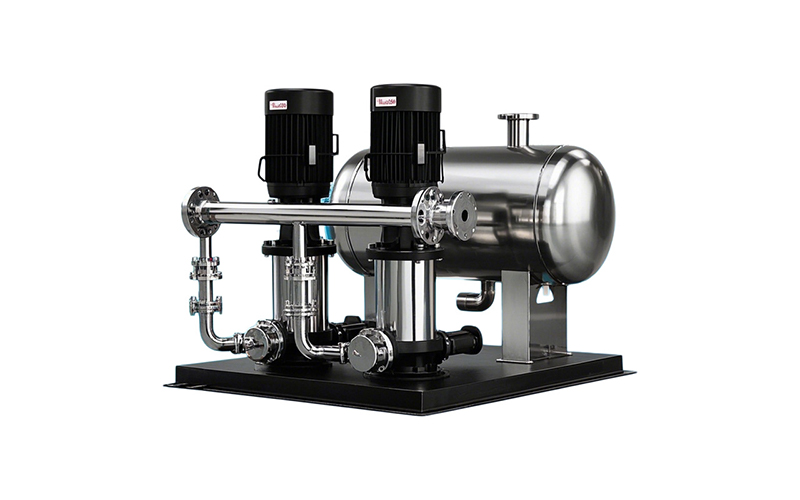
The working principle of a water pump is to transfer the mechanical energy of a prime mover or other external forces to the liquid to increase the liquid’s energy. Water supply or pressure boosting is an important function of water pumps. Their basic role includes transporting liquids such as water, oil, acid-alkali liquids, emulsions, suspensions, and liquid metals. Factors like hydraulics and efficiency after starting the pump will affect its working efficiency. The pump shaft rotates tightly inside the pump body.
When using a water pump, it is necessary to ensure that the pump is filled with water so that the liquid inside rotates with the pump shaft. When centrifugal force is applied, the pump shaft pushes the liquid out. When the water in the pump is exhausted, the pressure in the pump diffuser decreases, creating a vacuum. Under the action of external atmospheric pressure, water from the pipeline flows into the pump through the filter tube. As the discharge rate increases, the pressure gradually rises, and finally the fluid exits through the outlet. In this way, the liquid to be transported is continuously pumped out, forming a steady flow.
Types of Water Pumps:
Magnetic Pump:
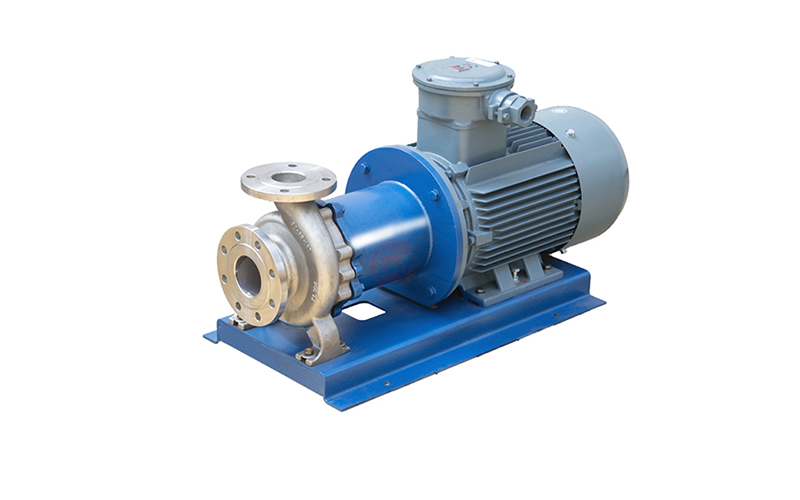
A magnetic pump is a leak-free pump type that uses the motor’s power transmitted to the pump via a magnetic coupling. An isolation sleeve is adopted between the inner and outer magnetic steels of the coupling to achieve sealing and prevent leakage. It consists of three parts: a magnetic coupling and a drive motor. The left end of the pump shaft is equipped with an impeller, and the right end with an inner magnetic rotor, with the pump shaft supported by sliding bearings. When the motor drives the outer magnetic rotor to rotate, the magnetic field passes through the air gap and isolation sleeve, driving the inner magnetic rotor to rotate synchronously, thereby driving the impeller to rotate. Magnetic pumps have the advantages of simple structure, high liquid transportation efficiency, and low noise, and are widely used in industrial, agricultural, construction and other fields.
Centrifugal Pump:
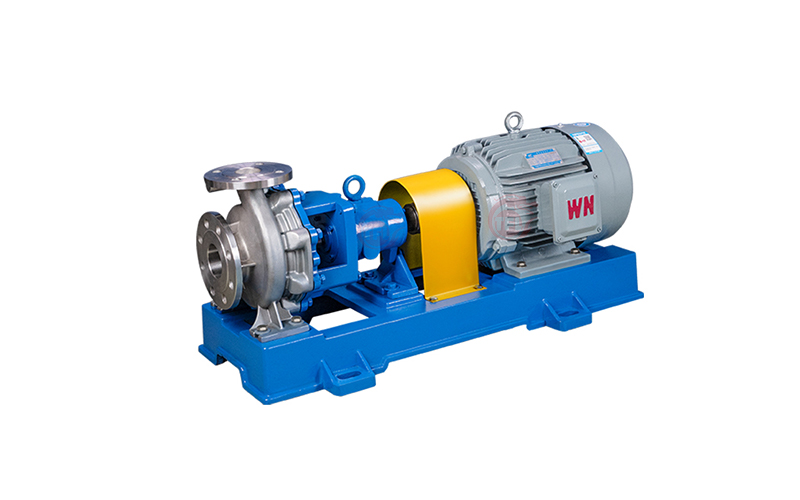
A centrifugal pump is a type of pump that uses the centrifugal force generated by the high-speed rotation of the impeller to throw water out, forming a vacuum for pumping water or irrigation. The impellers of centrifugal pumps are divided into three types: closed, semi-closed, and open. Centrifugal pumps are suitable for pumping clean water, irrigating farmland, etc.
Screw Pump:
A screw pump is a water pump that sucks liquid from the inlet through screw movement, then accelerates and discharges the liquid via screw rotation. It has a working principle similar to that of twin-screw pumps and gear pumps but with distinct differences. Screw pumps can transport liquids with a wide range of viscosity variations, featuring continuous and uniform flow, small pulsation, minimal flow change with pressure, and smooth operation without vibration or noise.
Submersible Pump:
A submersible pump is a type of pump that can work immersed in liquid, usually used for pumping well water or sewage. It is a water-lifting machine composed of a vertical motor combined with a centrifugal pump, axial flow pump, or mixed flow pump. Submersible pumps are characterized by compact structure, small size, light weight, and easy installation and use.
Self-Priming Pump:
A self-priming pump is a water pump with self-priming capability. Its working principle is to use the negative pressure inside the pump body to suck in liquid, then accelerate and discharge the liquid through rotor rotation. Self-priming pumps have a simple structure and are easy to operate, suitable for transporting clean water, sewage, chemical liquids, etc.
Gear Pump:
A gear pump is a widely used pump. Its working principle is to use the separation of the teeth of two gears to form low pressure, then suck in the liquid through the gear crown and transport it along the shell wall to the other side. Gear pumps are suitable for transporting liquids with lubricating properties.
Reciprocating Pump:
A reciprocating pump is a water pump that transfers liquids or gases from one location to another. Through the reciprocating movement of the piston, it compresses the liquid or gas to increase pressure, then discharges it through the discharge valve. The working principle of reciprocating pumps is to complete the transportation of liquids or gases through the reciprocating movement of the piston.
Sewage Pump:
A sewage pump is a water pump integrated with a motor and pump body, which can work deep under liquid. Sewage pumps have a compact structure, occupy a small area, and are convenient for installation and maintenance.
