
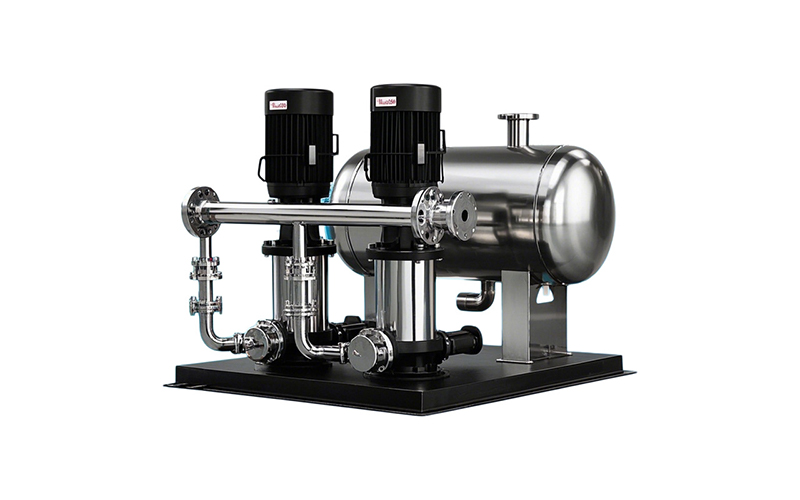
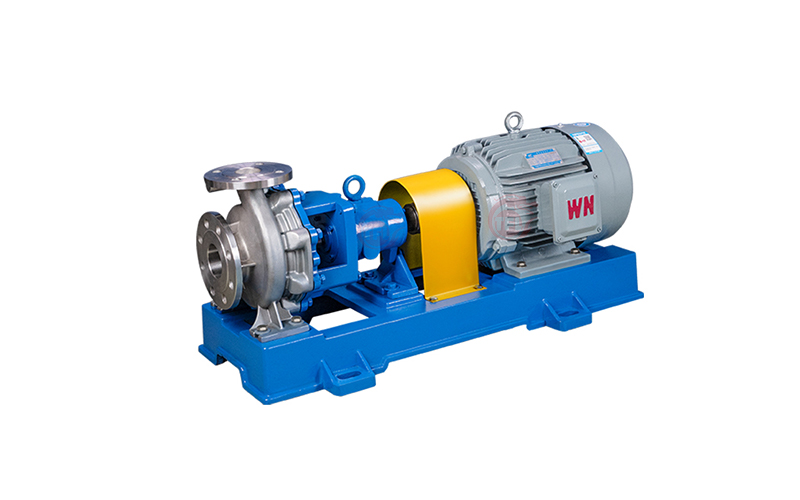
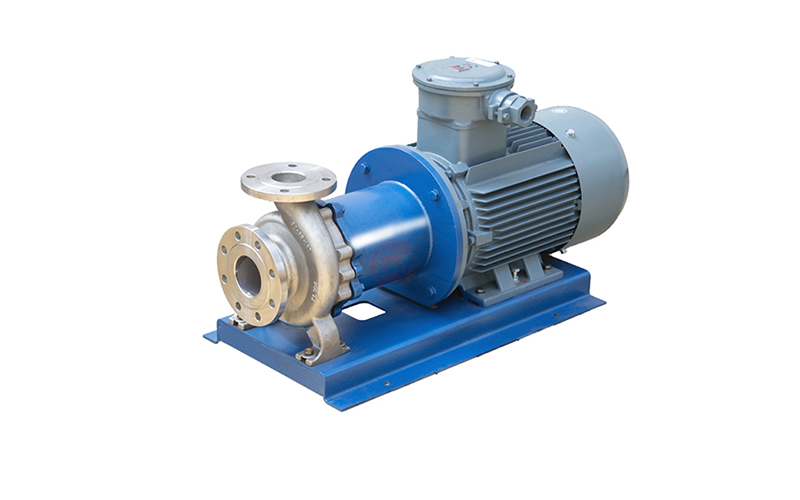
At present, the most widely used process pumps in China are: rotor pumps, centrifugal pumps, screw pumps, etc. The following will explain in detail the principles and advantages and disadvantages of rotor pumps, centrifugal pumps, and screw pumps.
Definition
1 Rotor pump
Rotor pumps are also called colloid pumps, cam pumps, three-leaf pumps or universal delivery pumps, etc., and are volumetric pumps. It uses the periodic conversion of multiple fixed volume delivery units in the working chamber to achieve the purpose of conveying fluids.
2 Centrifugal pump
The working principle of a centrifugal pump is centrifugal motion. Centrifugal motion is actually a manifestation of the inertia of an object. For example, when the water droplets on an umbrella rotate slowly, the water droplets will rotate with the umbrella. This is because the friction between the umbrella and the water droplets acts as the centripetal force for the water droplets. However, if the umbrella rotates faster, the friction is not enough to make the water droplets move in a circular motion. Then the water droplets will break away from the umbrella and move to the outer edge, just like using a rope to pull a stone to do a circular motion. If the speed is too fast, the rope will break and the stone will fly out. This is the so-called centrifugal motion.
When the centrifugal pump is working, the high-speed rotating impeller blades drive the liquid to rotate and throw the liquid out, thereby achieving the purpose of transportation. Before the centrifugal pump works, the pump body and the water inlet pipe must be filled with liquid to form a vacuum state. When the impeller rotates rapidly, the blades cause the liquid to rotate quickly. The rotating liquid flies out of the impeller under the action of centrifugal force. After the liquid in the pump is thrown out, a vacuum area is formed in the center of the impeller. The external liquid is pressed into the water inlet pipe through the pipe network under the action of atmospheric pressure, and continuous transportation can be achieved.
3 Screw pump
Screw pump is a new type of pump that works on the principle of rotary meshing positive displacement. The main working parts are the eccentric screw (rotor) and the fixed bushing (stator). Due to the special geometric shape of the two parts, separate sealed chambers are formed. The medium is pushed and flowed evenly in the axial direction, the internal flow velocity is low, the volume remains unchanged, and the pressure is stable, so no eddy currents and agitation will be generated.
In addition, screw pumps have the following advantages:
1) Wide pressure and flow range. The pressure is about 3.4-340kg*N/c㎡, and the flow rate can reach 300-3000 cubic meters;
2) A wide range of types and viscosities of transported liquids;
3) Because the inertia force of the rotating parts in the pump is low, a very high speed can be used;
4) Good suction performance and strong self-priming ability;
5) Uniform and continuous flow, small vibration, low noise, and long life;
6) Compared with other rotary pumps, it is less sensitive to incoming gas and dirt;
7) Solid structure and easy installation and maintenance.
Comparison
1. Comparison between rotor pump and single screw pump
1) The rotor pump can run dry, which is especially important in case of sudden material failure or operating errors, preventing damage to the pump and ensuring safe operation.
2) The rotor pump is small in size, one-third of the installation area of the single screw pump, reducing the scope and cost of civil engineering.
3) The rotor pump can be repaired online without dismantling the pipeline, which is convenient and fast, reducing downtime.
4) The non-extrusion working principle of the rotor pump and the adjustable shell design extend the service life, reduce the number of maintenance times, and save spare parts costs.
2. Comparison between screw pump and centrifugal pump
1) When gas enters the pump cavity, the centrifugal pump runs very unstably, the efficiency is greatly reduced, the pump vibrates greatly, and the cavitation is serious. The screw pump can well realize the mixed transportation of gas, liquid and solid.
2) The speed of the centrifugal pump is generally very high, up to thousands of revolutions per minute, and the shearing property of the medium is very large; the screw pump generally runs at a low speed to ensure no pulse and vibration, and realize shear-free transportation.
3) When a centrifugal pump is used to transport media, once the media becomes viscous, the flow rate or pressure will drop sharply. A screw pump is more suitable for transporting media with high viscosity and high solid content.