
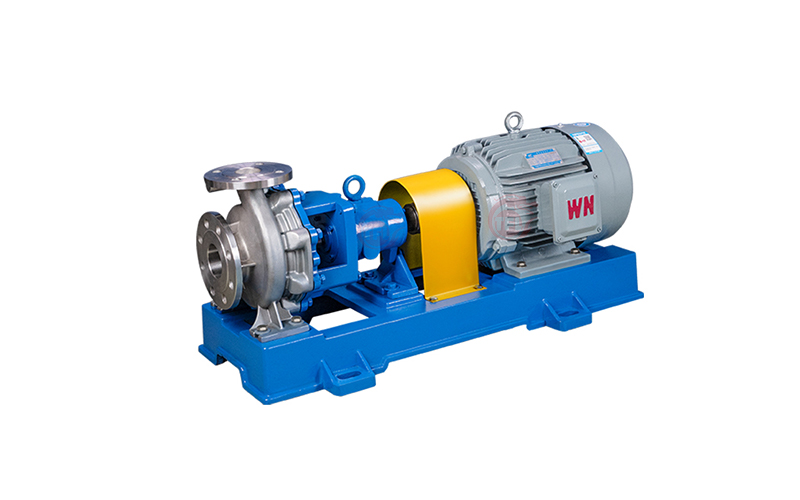
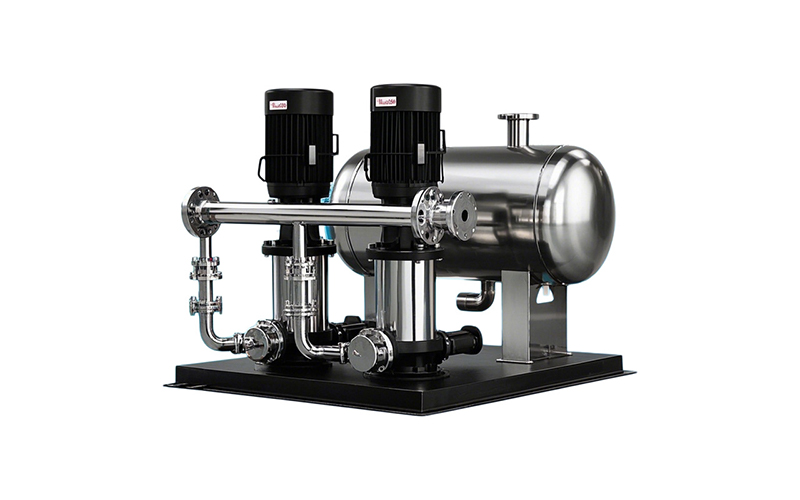
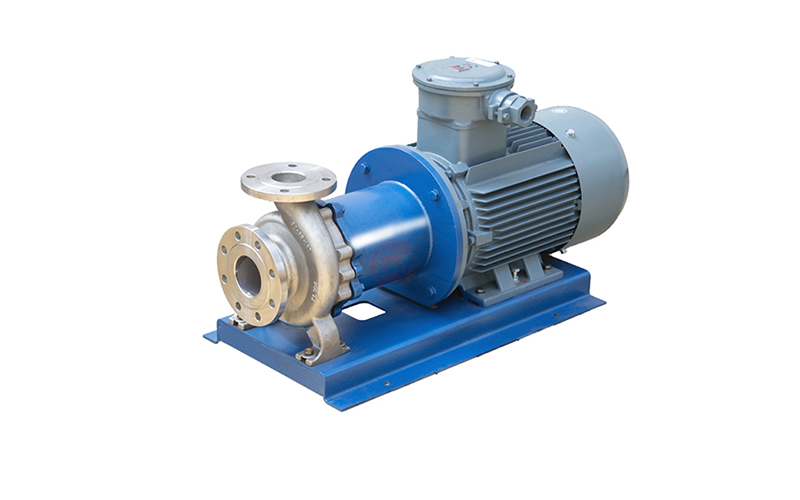
Centrifugal pumps are basically sealed by mechanical seals, while magnetic pumps are sealed by static seal isolation sleeves. There are many types of mechanical seals for centrifugal pumps, and the models vary, but there are five main leakage points: the seal between the sleeve and the shaft; the seal between the dynamic ring and the sleeve; the seal between the dynamic and static rings; the seal between the static ring and the static ring seat; the seal between the sealing end cover and the pump body. It is very troublesome for the pump seal to fail and leak. Whether it is a centrifugal pump or a magnetic pump, liquid leakage is an important factor causing accidents in production. The following is an analysis and solution to the problem of leakage caused by seal failure.
1. Leakage during test run
After the pump mechanical seal has been statically tested, the centrifugal force generated by high-speed rotation during operation will suppress the leakage of the medium. Therefore, after excluding the failure of the shaft and end cover seals, the mechanical seal leakage during test run is basically caused by the damage of the dynamic and static ring friction pairs.
The main factors that cause the failure of the friction pair seal are:
(1) During operation, due to abnormal phenomena such as vacuuming and cavitation, a large axial force is caused, causing the contact surface of the dynamic and static rings to separate;
(2) When installing the mechanical seal, the compression amount is too large, resulting in serious wear and scratches on the end surface of the friction pair;
(3) The dynamic ring seal is too tight, and the spring cannot adjust the axial floating amount of the dynamic ring;
(4) The static ring seal is too loose. When the dynamic ring floats axially, the static ring is separated from the static ring seat;
(5) There are granular substances in the working medium, which enter the friction pair during operation. Detect the dynamic and static ring seal end faces;
(6) The design selection is wrong, the seal end face pressure is too low or the sealing material has a large cold shrinkage. The above phenomenon often occurs during the trial operation. Sometimes it can be eliminated by properly adjusting the static ring seat, but most of them need to be disassembled and replaced.
2. Leakage during installation static test
After the mechanical seal is installed and debugged, it is generally necessary to conduct a static test to observe the leakage. If the leakage is small, it is mostly a problem with the dynamic ring or static ring seal; if the leakage is large, it indicates that there is a problem between the dynamic and static ring friction pairs. On the basis of preliminary observation of the leakage and judgment of the leakage location, manually turn the wheel to observe. If there is no obvious change in the leakage, there is a problem with the static and dynamic ring seals; if there is a significant change in the leakage during turning, it can be determined that there is a problem with the dynamic and static ring friction pairs; if the leakage medium is sprayed along the axial direction, there are mostly problems with the dynamic ring seal, and if the leakage medium sprays all around or leaks from the water cooling hole, it is mostly the static ring seal that fails. In addition, leakage channels can also exist at the same time, but generally there is a primary and secondary distinction. As long as you observe carefully and are familiar with the structure, you will be able to make a correct judgment.
3. Failure caused by loss of lubricating film on both sealing end faces
(1) Due to the existence of the end face seal load, the pump is started when there is no liquid in the seal chamber, causing dry friction;
(2) The medium is lower than the saturated vapor pressure, causing the end face liquid film to flash and lose lubrication;
(3) If the medium is a volatile product, when scaling or blockage occurs in the mechanical seal cooling system, the saturated vapor pressure of the medium increases due to end face friction and the heat generated by the rotating element stirring the liquid, which also causes the medium pressure to be lower than its saturated vapor pressure.
4. Mechanical seal failure caused by corrosion
(1) Pitting and even penetration of the sealing surface.
(2) Due to the welding of the tungsten carbide ring and the stainless steel seat, the stainless steel seat is prone to intergranular corrosion during use;
(3) Welded metal bellows, springs, etc. are prone to rupture under the combined action of stress and medium corrosion.
5. Seal failure due to wear of the sealing end face
(1) The balance degree β of the mechanical seal also affects the wear of the seal. In general, the balance degree β=75% is appropriate. When β<75%, although the wear is reduced, the leakage increases and the possibility of the seal surface opening increases. For high-load (high PV value) mechanical seals, due to the large friction heat of the end face, β is generally 65% to 70%. For low-boiling hydrocarbon media, since temperature is more sensitive to the gasification of the medium, in order to reduce the influence of friction heat, β is preferably 80% to 85%.
(2) The poor wear resistance, large friction coefficient, and excessive end surface pressure (including spring pressure) of the friction pair will shorten the service life of the mechanical seal. For commonly used materials, the order of wear resistance is: silicon carbide-carbon graphite, cemented carbide-carbon graphite, ceramic-carbon graphite, sprayed ceramic-carbon graphite, silicon nitride ceramic-carbon graphite, high-speed steel-carbon graphite, and cladding cemented carbide-carbon graphite.
(3) For media containing solid particles, the entry of solid particles into the sealing surface is the main cause of seal failure. Solid particles entering the friction pair end face act as abrasives, causing severe wear and failure of the seal. Reasonable gap between the sealing surface, the balance of the mechanical seal, and the flashing of the liquid film on the sealing end face are the main reasons for the end face opening and the entry of solid particles.
6. Mechanical seal leakage caused by errors in installation, operation or the equipment itself
(1) Mechanical seal leakage caused by poor installation. It mainly manifests in the following aspects:
1) The contact surface of the dynamic and static rings is uneven, and they are bruised or damaged during installation;
2) The dynamic and static ring seals are of incorrect size, damaged or not pressed tightly;
3) There are foreign objects on the surface of the dynamic and static rings;
4) The V-shaped seals of the dynamic and static rings are installed in the opposite direction, or the edges are reversed during installation;
5) There is leakage at the sleeve, the seal is not installed or the pressing force is insufficient;
6) The spring force is uneven, the single spring is not vertical, and the lengths of multiple springs are different;
7) The end face of the seal cavity is not vertical enough to the shaft;
8) There are corrosion points at the active part of the seal on the sleeve.
(2) The main reasons for mechanical seal leakage during operation of the equipment are:
1) The axial movement of the pump impeller exceeds the standard, the shaft vibrates periodically, the process operation is unstable, and the pressure in the sealing chamber changes frequently, which will cause periodic leakage of the seal;
2) The friction pair is damaged or deformed and cannot run in, causing leakage;
3) Improper selection of sealing ring materials, swelling and loss of elasticity;
4) The large spring is not in the right direction;
5) The vibration of the equipment is too large during operation;
6) Scale is formed between the dynamic and static rings and the shaft sleeve, causing the spring to lose its elasticity and cannot compensate for the wear of the sealing surface;
7) The sealing ring is cracked, etc.
(3) The pump leaks when it is restarted after being stopped for a period of time. This is mainly due to the solidification and crystallization of the medium near the friction pair, the presence of scale on the friction pair, and the corrosion and blockage of the spring, resulting in loss of elasticity.
7. Mechanical seal failure due to high temperature effect
1. Thermal cracking is a common failure phenomenon of high-temperature oil pumps, such as oil residue pumps, recycling oil pumps, and atmospheric and vacuum tower bottom pumps. Radial cracks will appear on the ring surface due to dry friction, sudden interruption of cooling water, impurities entering the sealing surface, and vacuuming.
2. Graphite carbonization is one of the main reasons for seal failure when using carbon-graphite rings. During use, if the graphite ring exceeds the allowable temperature (generally -105 ~ 250 ° C), resin will precipitate on its surface, and the resin near the friction surface will be carbonized. When there is a binder, it will foam and soften, increasing the leakage of the sealing surface and causing seal failure;
3. Auxiliary seals (such as fluororubber, EPDM, and all-rubber) will age, crack, harden, and lose elasticity rapidly after exceeding the allowable temperature. The flexible graphite currently used has good high temperature resistance and corrosion resistance, but its resilience is poor. It is also easy to crack and is easily damaged during installation.