
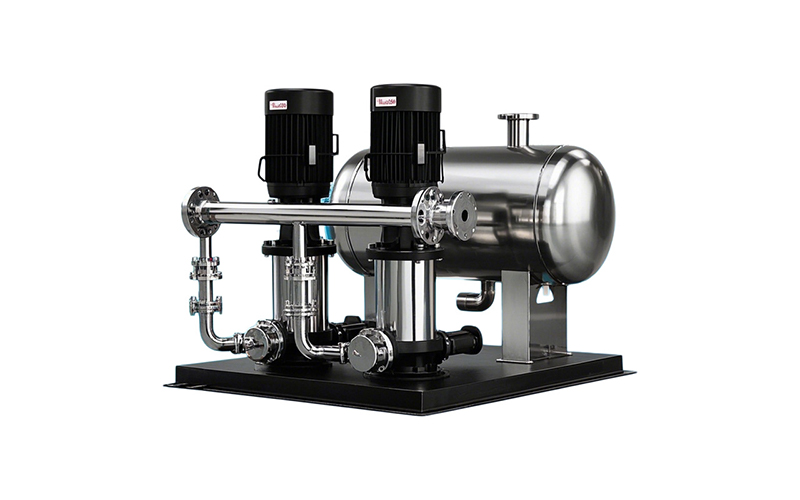
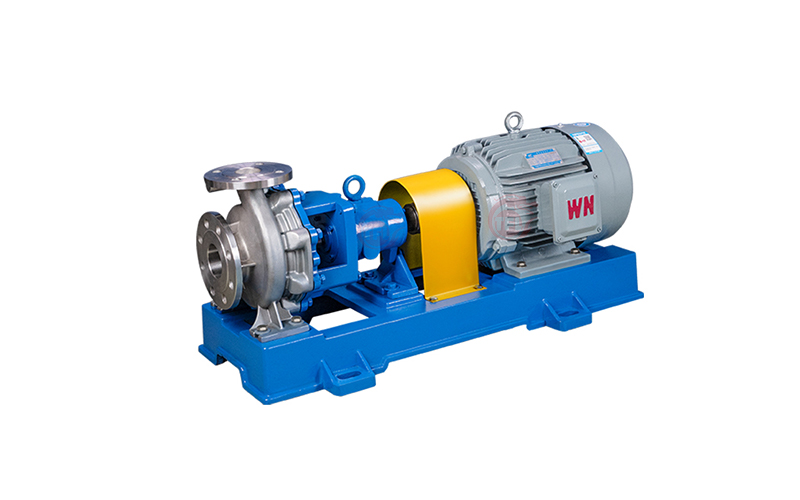
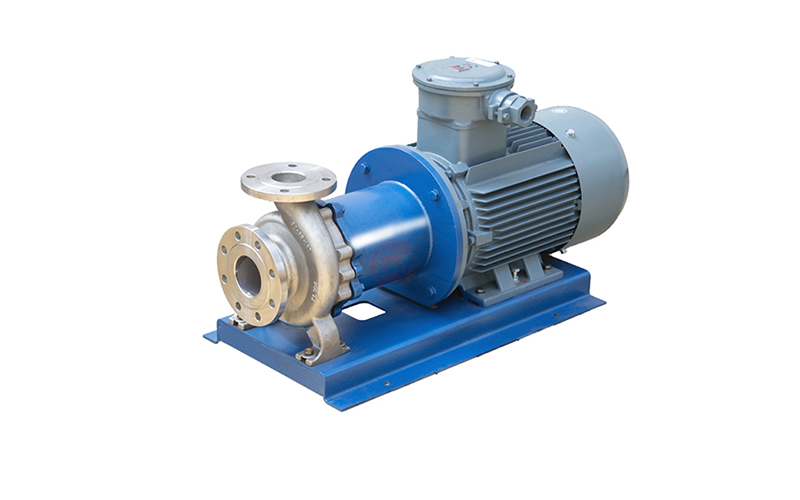
Chemical centrifugal pumps play a vital role in modern industry and are widely used in chemical, petroleum, pharmaceutical and food industries. This paper will deeply analyze the working principle of chemical centrifugal pump, help users better understand its operating mechanism and application scenarios, and provide reference for the selection and maintenance of centrifugal pump.
First, the basic concept of chemical centrifugal pump
The chemical centrifugal pump is a kind of pump equipment that transports liquid from low place to high place by centrifugal force. It uses a high-speed rotating impeller to convert mechanical energy into kinetic energy and potential energy of liquid to achieve liquid transportation and pressurization.
Second, the working principle of the centrifugal pump
1. Liquid inhalation
When the centrifugal pump starts, the impeller rotates at high speed, and the center area of the impeller forms a low pressure area. Under the action of atmospheric pressure or liquid weight, the liquid enters the pump chamber through the suction inlet. The suction process of the liquid depends on the self-priming capacity of the pump and the design of the suction pipeline.
2. Acceleration of liquid
The liquid entering the pump chamber is captured by the impeller blades and accelerated as the impeller rotates. The impeller blades transfer mechanical energy to the liquid, so that its kinetic energy and pressure can increase. The shape and rotation speed of the impeller have a direct influence on the effect of liquid acceleration.
3. Discharge of liquid
The liquid accelerated by the impeller moves from the central area of the impeller to the outer edge under the action of centrifugal force, and the kinetic energy is converted into pressure energy. Finally, the liquid is discharged from the pump outlet at a higher pressure and speed to complete the delivery of the liquid.
Three, the main components of the centrifugal pump
Impeller: The core component of the centrifugal pump, responsible for accelerating and pressurizing the liquid.
Pump housing: Encloses the impeller, forms the pump chamber and directs the flow of liquid, usually made of a corrosion-resistant material.
Shaft: connects the motor and impeller to transfer mechanical energy.
Sealing device: to prevent liquid leakage, common mechanical seal and packing seal.
Bearings: Support shaft rotation to reduce friction and wear.
Fourth, the advantages of chemical centrifugal pump
High efficiency: Centrifugal pump can efficiently convert mechanical energy into kinetic energy and potential energy of liquid, and has high transmission efficiency.
Simple structure: centrifugal pump design is simple, easy to manufacture and maintenance.
Wide range of application: suitable for conveying a variety of chemical media, including corrosive, volatile and high temperature media.
Stable operation: the centrifugal pump runs smoothly, and the noise and vibration are small.
Fifth, the application field of chemical centrifugal pump
Chemical production: conveying acid, alkali, salt and other corrosive media, suitable for chemical reaction, separation and purification processes.
Petroleum industry: Used for the transportation of crude oil, refined oil and various petrochemical products.
Pharmaceutical industry: Conveying pharmaceutical liquids, solvents and other chemical raw materials to ensure the sterile and efficient production process.
Food industry: Transport a variety of food additives and raw materials to ensure the health and safety of food production.
Six, the selection of chemical centrifugal pump precautions
Medium characteristics: Select the appropriate pump type and material according to the corrosion, viscosity, temperature and other characteristics of the conveying medium.
Flow and head: Determine the flow and head of the pump according to the process requirements to ensure that the performance of the pump meets the production needs.
Operating environment: Consider the installation position of the pump, operating environment and other factors, choose the appropriate pump structure and accessories.
Maintenance and maintenance: Choose a pump type that is easy to maintain and maintain, reducing downtime and maintenance costs.
With its efficient and stable performance, chemical centrifugal pumps are widely used in chemical, petroleum, pharmaceutical and food industries. By understanding its working principle and main components, users can better select and maintain the centrifugal pump to ensure the smooth progress of the production process. The correct selection of the centrifugal pump suitable for the working condition can not only improve production efficiency, but also effectively extend the service life of the equipment.