
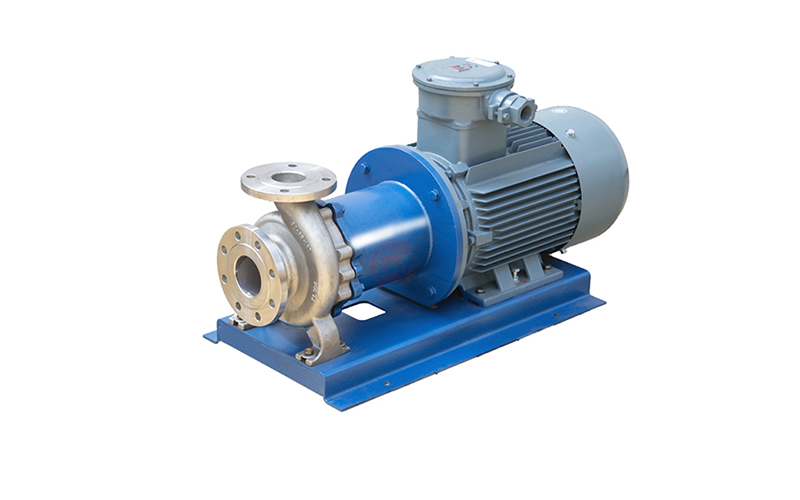
Fluoroplastic magnetic pumps may fail to deliver fluid, a common malfunction with multiple potential causes. First, check if there is air leakage in the pump’s suction pipeline, whether the air in the suction pipe has been discharged, if the fluid filled in the fluoroplastic magnetic pump is sufficient, and if there are any debris blocking the suction pipe. Also, verify if the pump is running in reverse (especially after motor replacement or power supply line maintenance) and ensure the pump’s suction lift is not excessively high. If the problem persists after the above checks, disassemble the pump to inspect for a broken pump shaft, check if the rotating and stationary rings are intact, and see if the entire rotor can move axially slightly. If axial movement is difficult, check if the carbon bearing is too tightly coupled with the pump shaft.
It is worth noting that if the fluoroplastic magnetic pump has been repaired several times but the problem remains unresolved, attention should be paid to the normal operation of the magnetic coupling. Bearings, inner magnetic rotors, and sleeves generate heat during operation, which increases the working temperature. On the one hand, this reduces the transmitted power; on the other hand, it causes significant troubles for fluoroplastic magnetic pumps transporting vaporizable fluids. The power transmitted by the magnetic steel decreases continuously as the temperature rises. Generally, below the magnetic steel’s maximum operating temperature, the reduction in transmission capacity is reversible; however, above the maximum temperature, it becomes irreversible. That is, after the magnetic steel cools down, the lost transmission capacity cannot be recovered. For high-temperature media exceeding 90°C, high-grade magnetic steel and imported fluoroplastic (PFA) should be selected.
In special cases where the magnetic coupling slips (loses synchronization), the eddy current heat in the sleeve will increase sharply, leading to a rapid rise in temperature. If not handled promptly, it will cause demagnetization of the magnetic steel and failure of the magnetic coupling.
Therefore, fluoroplastic magnetic pumps should be designed with a reliable cooling system. For non-vaporizable media, the cooling circulation system generally draws fluid from the impeller outlet or pump outlet, passes it through the bearing and magnetic transmission parts, and returns it to the suction port. For vaporizable media, an additional heat exchanger should be installed or the fluid should be directed to an external storage tank to prevent heat from returning to the suction port. For media containing solid impurities or ferromagnetic impurities, filtration should be considered. For high-temperature media, cooling measures should be taken to ensure the magnetic coupling does not exceed its maximum operating temperature.
When checking if the rotational speed is sufficient, first measure the motor’s own rotational speed with a tachometer to ensure it is normal. If the motor speed is normal, check for possible slippage of the magnetic coupling.
