
Magnetic drive pumps and centrifugal pumps are commonly used pumps in chemical production. Magnetic drive pumps are a type of centrifugal pump, also known as magnetic drive centrifugal pumps.
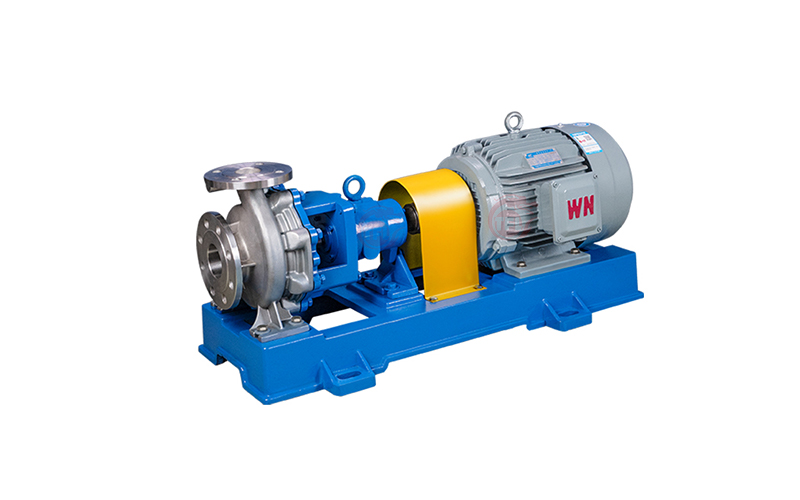
I. Advantages of Centrifugal Pumps:
- Simple, compact structure, high mechanical strength, easy to disassemble for maintenance, and has lower foundation requirements than magnetic pumps.
- Contains no valves, making it suitable for pumping slurries; special designs can handle slurries with larger solid particles.
- Operates at high speed, can be directly coupled to the motor, and has a simple transmission system, making installation easy.
- Capable of a wide flow range, handling high flow rates and high heads.
- The mechanical seal can be flushed externally; it can run dry for short periods and pump media with small particles.
Disadvantages of Centrifugal Pumps:
- Not suitable for operation at low flow rates. Prolonged use at low flow and high head is limited and can cause issues.
- Improper installation can lead to “cavitation”.
- Lower efficiency compared to magnetic pumps.
- Requires complex auxiliary systems for the mechanical seal, such as cooling, flushing, and quench fluids.
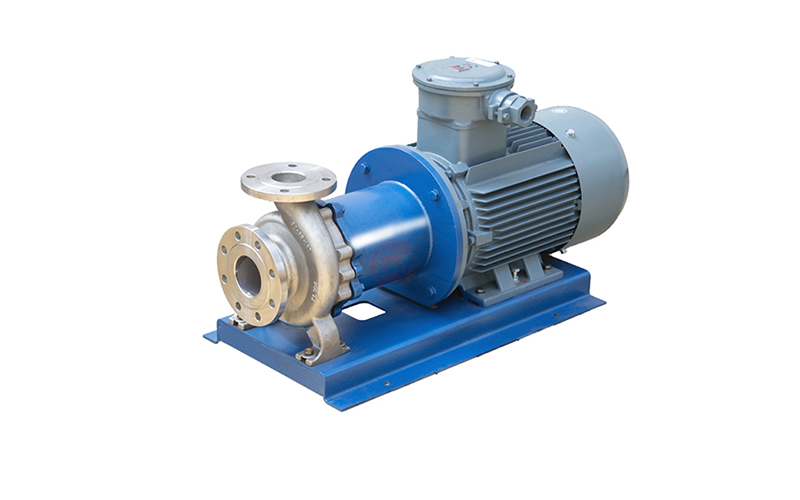
II. Advantages of Magnetic Drive Pumps:
- Lubricated and cooled by the pumped medium itself, eliminating the need for separate lubrication or cooling water, thus reducing energy consumption.
- The dynamic shaft seal is replaced with a sealed static containment shell, enclosing the medium within. This allows for leak-proof transfer of flammable, explosive, toxic, or precious liquids.
- The magnetic coupler and the inner magnet rotate synchronously without contact or friction, resulting in low power loss, high efficiency, reduced motor vibration transfer, and lower noise.
- In case of overload, the inner and outer magnet rotors slip relative to each other, protecting the motor and pump.
- Less prone to failure and easier to maintain.
Disadvantages of Magnetic Drive Pumps:
- More expensive than centrifugal pumps.
- Cannot pump media containing particulate matter, as this can easily cause damage.
- Must absolutely not run dry (without liquid).
III. Differences Between Magnetic Drive Pumps and Centrifugal Pumps:
- A centrifugal pump’s impeller is driven by a motor via a coupling, while a magnetic pump’s impeller is driven by magnetic eddy currents generated between the inner and outer magnet assemblies.
- Magnetic pumps have inner and outer magnet rotors, whereas centrifugal pumps do not.
- Magnetic pumps are seal-less; centrifugal pumps have shaft seals.
- Magnetic pumps rely on the pumped medium for lubrication and cooling, so they cannot run dry and cannot handle media with particulate impurities. Centrifugal pumps can handle these conditions.