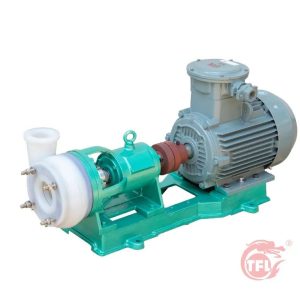
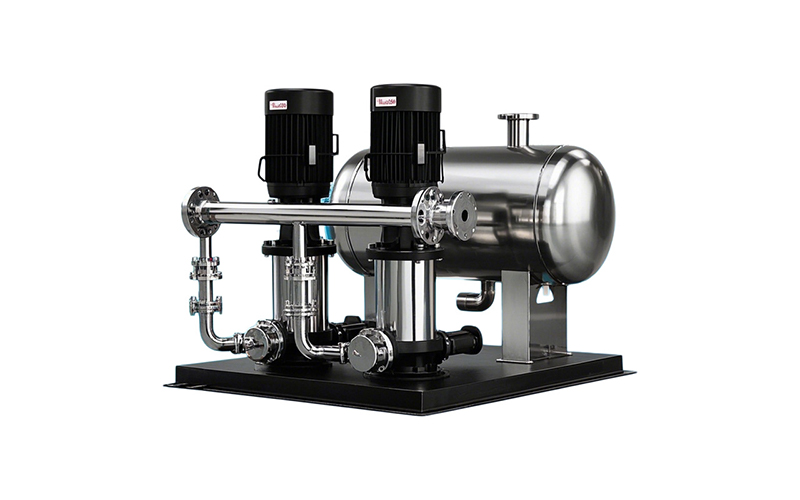
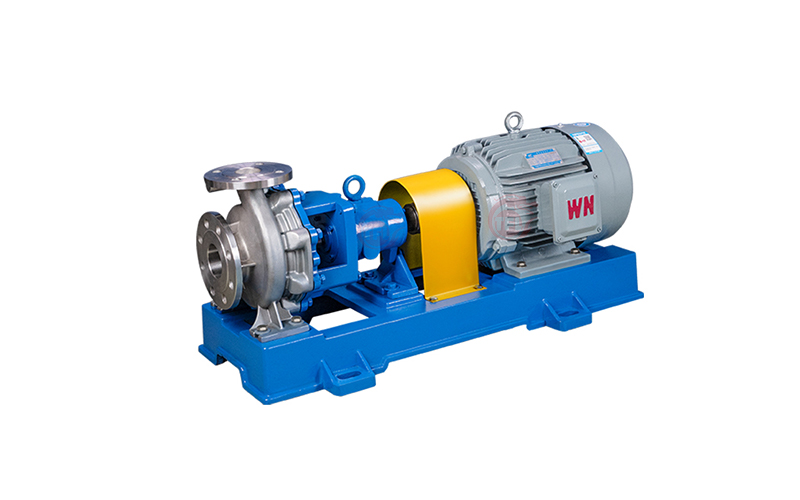
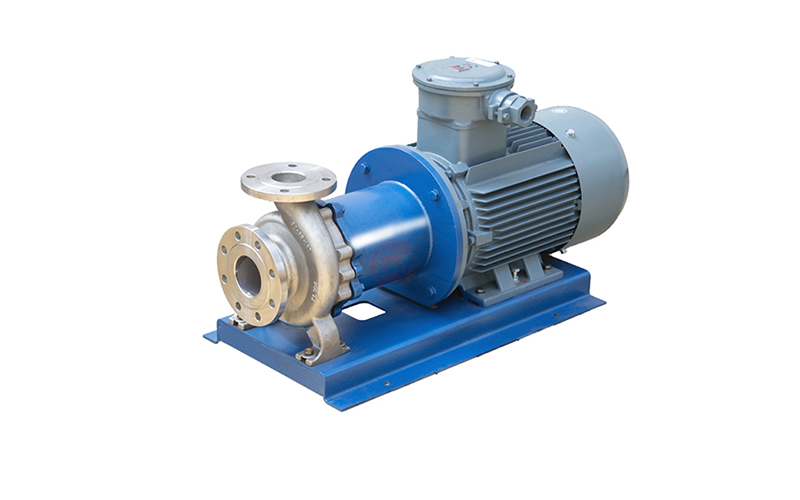
Magnetic pumps and centrifugal pumps are commonly used in chemical production. A magnetic pump is a type of centrifugal pump, also known as a magnetic centrifugal pump.
I. Advantages of Centrifugal Pumps:
- Simple and compact structure, high mechanical strength, convenient disassembly and maintenance, and lower requirements for the installation foundation compared with magnetic pumps.
- No valve devices inside the centrifugal pump, so it is suitable for conveying suspensions. With special design, it can also transport suspensions containing large solid particles.
- Capable of high-speed operation, direct connection with the motor, simple transmission mechanism, and easy installation.
- Wide flow range, capable of conveying media with large flow rate and high head.
- The mechanical seal can be connected with external flushing water, allowing short-term idling, and can convey media containing fine particles.
Disadvantages of Centrifugal Pumps:
- Not suitable for low-flow operation; long-term use under low-flow and high-head conditions will be restricted and cause adverse effects.
- Improper installation may lead to “cavitation” phenomenon.
- Lower efficiency than magnetic pumps.
- Mechanical seal centrifugal pumps require complex supporting systems such as cooling, flushing, and quenching.
II. Advantages of Magnetic Pumps:
- Magnetic pumps achieve lubrication and cooling through the conveyed medium itself, without the need for independent lubrication systems and cooling water sources, reducing energy consumption.
- The sealing form of the pump shaft is changed from dynamic seal to closed static seal, and the medium is enclosed in the isolation sleeve, enabling leak-free transportation. It is suitable for conveying flammable, explosive, toxic, harmful and valuable liquids.
- The magnetic coupling rotates synchronously with the inner magnetic rotor, without contact friction, resulting in low power consumption and high efficiency. At the same time, it reduces the impact of motor vibration on the pump body, and the operation noise is lower.
- In case of overload, the inner and outer magnetic rotors will slip relatively, protecting the motor and the pump body.
- Low failure rate and convenient maintenance.
Disadvantages of Magnetic Pumps:
- Higher price compared with centrifugal pumps.
- Cannot convey media containing particles, otherwise it is easy to cause equipment damage.
- Idling is strictly prohibited.
III. Differences Between Magnetic Pumps and Centrifugal Pumps:
- Power transmission method: Centrifugal pumps drive the impeller to rotate through the motor via a coupling; magnetic pumps drive the impeller to rotate through the magnetic eddy current generated by the inner and outer magnets.
- Core component difference: Magnetic pumps are equipped with inner magnetic rotors and outer magnetic rotors, while centrifugal pumps are not.
- Seal structure difference: Magnetic pumps have no shaft seals, while centrifugal pumps have shaft seals.
- Operational requirement difference: Magnetic pumps rely on the conveyed medium for lubrication and cooling, so they cannot idle or transport materials containing impurity particles, which centrifugal pumps can do.